Where Is the Thermostat on a Water Heater? A Practical DIY Guide
Learn where the thermostat is on a water heater, how to identify dual thermostats, safety steps, and best practices for maintaining comfortable, safe hot water. A practical Thermostat Care guide for homeowners.


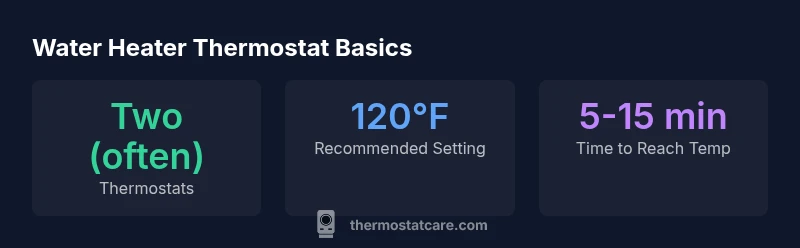
In most homes, the thermostat on a water heater sits behind the access panel on the side of the tank. Many units have two thermostats—upper and lower—for dual elements. To adjust safely, power off the unit, remove the panel, and use the dial or digital control to set around 120°F (49°C). If you’re unsure, consult a professional.
Where to Find the Thermostat on a Water Heater
If you’ve ever asked, where is the thermostat on a water heater, you’re not alone. On most residential tanks, the thermostat lives behind a small access panel on the side of the tank. Older models often have two thermostats—an upper and a lower one—paired with two elements inside the tank. The cover panel is typically secured with screws; you’ll need a screwdriver to remove it and a flashlight to inspect the components. Once exposed, you’ll see a dial or digital control and two wires connected to the thermostat. For many homeowners, locating these thermostats is the first step in adjusting water temperature, diagnosing hot-water inconsistency, or conducting routine maintenance. The phrase where is thermostat on water heater should lead you to the correct side of the tank where the access panel sits.
Understanding Thermostats vs Heating Elements
Thermostats regulate the tank’s water temperature by signaling the heating element when to turn on or off. On single-element units, a single thermostat governs heating. On older two-element units, there are two thermostats—upper and lower—each linked to its corresponding element. A modern unit may have a single, more advanced control with digital readouts. Knowing whether you’re dealing with one or two thermostats helps you avoid unnecessary adjustments and ensures you target the correct control when troubleshooting hot water problems.
- Visual cues: Look for two separate dial housings or a single display with labeled “Upper” and “Lower” indicators.
- Function: The upper thermostat typically controls the first element, while the lower thermostat controls the second.
- Health check: If only one thermostat is accessible, ensure you’re working on the right panel and refer to the manufacturer’s wiring diagram for the tank model.
Safety First: Precautions Before You Touch a Water Heater Thermostat
Safety is the top priority when adjusting water heater thermostats. Before you touch anything, power off the unit and disconnect it from the electrical supply to minimize the risk of shock. If you’re in a rented space or the unit sits near a water source, consider shutting off the breaker to the entire circuit that feeds the water heater. Avoid forcing components or prying the insulation—panels are designed to protect the thermostat wiring. After you’ve powered down, wait a few minutes for any residual heat to dissipate. Wear insulated gloves and use a flashlight to clearly see wiring connections. If you smell burning or notice damaged insulation, do not proceed and call a professional.
How to Identify Which Thermostat to Adjust
To identify which thermostat to adjust, first determine whether your tank uses a single thermostat or two. On dual-thermostat systems, the upper thermostat governs the top portion of the tank and the lower thermostat controls the bottom portion. If your unit has an integrated digital control, it may not be obvious which one to tweak. In these cases, you should consult the user manual or the nameplate on the side of the tank for the model number and corresponding wiring diagram. Labeling on the panel can help you avoid misadjustments. If you feel uncertain, start with the upper thermostat and verify hot water temperature after a test run of a cycle.
How to Adjust a Standard Water Heater Thermostat (Safe DIY Steps)
Follow these steps to adjust safely:
- Power off the heater at the breaker and confirm there is no voltage by testing the circuit. 2) Remove the access panel screws and gently lift the panel away. 3) Note the current temperature setting and mark the position of the dial. 4) Use a screwdriver to adjust the thermostat in small increments—about 5°F at a time—and replace the panel. 5) Restore power and run hot water for 30–60 minutes, then test the outlet faucet’s temperature. 6) If the water remains too hot or too cold after the test, recheck wiring and seek professional assistance.
Important reminder: a common target for most households is around 120°F (49°C). This helps avoid scalding and minimizes energy use. Always consult the manufacturer’s guidance for your specific model before making larger adjustments.
Common Mistakes That Cause Thermostat Issues
- Turning the dial too far in one go without testing the results
- Mixing up the upper and lower thermostats on dual-element tanks
- Neglecting safety steps by skipping power-down procedures
- Posting incorrect temperature targets without verifying model specifications
- Ignoring age-related wear that can affect thermostat response and wiring health
By avoiding these mistakes, you can improve safety, energy efficiency, and water temperature consistency.
When to Call a Professional for Water Heater Thermostat Issues
If your water heater continues to underperform after a conservative adjustment, or if you see signs of wear, rust, or leaking around the access panel, it’s time to call a licensed plumber or HVAC technician. Professionals can verify thermostat calibration, test electrical connections, and diagnose element problems without risking injury or voiding warranties. Especially for older tanks, professional inspection can prevent costly mistakes and energy waste.
Maintenance Tips to Extend Water Heater Life and Temperature Stability
Routine maintenance reduces thermostat-related issues and extends the life of your water heater:
- Inspect the access panel and insulation for damage and re-seal as needed
- Clean sediment from the tank periodically to improve heating efficiency
- Check the temperature-pressure relief valve for proper operation and signs of corrosion
- Calibrate thermostats following the manufacturer’s schedule and replace aging components
- Schedule an annual check with a professional to verify safety features and electrical connections
Thermostat location, access, and adjustment overview
| Aspect | Description | Typical Location |
|---|---|---|
| Location | Behind the access panel on the side; older tanks may have two thermostats (upper and lower) | Side of the tank, near the cold-water inlet |
| Access requirements | Power off and remove panel screws; use a screwdriver | Panel on the side of the tank |
| Adjustment guidance | Common target around 120°F (49°C) across many homes | Mostly on the outer dial or digital display |
Questions & Answers
Where is the thermostat located on most residential water heaters?
Most residential water heaters place the thermostat behind the side access panel. On older tanks, there are usually two thermostats—upper and lower. Use a flashlight to locate the dial or digital control behind the panel and reference the model’s manual for exact labeling.
It's typically behind the side access panel; older tanks often have two thermostats—upper and lower.
Can I adjust the thermostat myself, and what setting should I use?
Yes, you can adjust it yourself, but follow safety steps. A common target is around 120°F (49°C) to balance hot water and energy use. Make small increments, test the water after a run, and avoid exceeding the manufacturer’s recommended range.
You can adjust it, but start around 120°F and test gradually.
How many thermostats does a water heater have, and how do I tell which to modify?
Most older tanks have two thermostats (upper and lower) tied to two elements; newer units may have a single thermostat or digital controller. Check the unit’s manual or label for the exact configuration before making adjustments.
Older units usually have two; newer ones may have one or digital controls.
What should I do if adjusting the thermostat doesn’t fix hot water problems?
If adjustments don’t resolve the issue, check for sediment buildup, faulty heating elements, or broken wiring. Shut off power and consider a professional inspection to prevent potential safety hazards and ensure proper calibration.
If it still isn’t hot enough, there might be other problems—call a pro.
Is it safe to turn the thermostat up to a higher temperature to speed up hot water?
No. Raising the temperature increases the risk of scalding and can cause energy waste. Stay near the standard target (around 120°F) unless a professional advises otherwise.
Don’t raise it too high; risks of scalding and wasted energy.
“Accessing and adjusting a water heater thermostat can improve comfort and efficiency when done safely; always power off and follow manufacturer guidance.”
What to Remember
- Locate the thermostat behind the side access panel
- Older tanks often have two thermostats (upper and lower)
- Always power off before touching wiring or components
- Aim for around 120°F (49°C) for safe, efficient hot water
- Consult manufacturer guidance for exact model procedures