When to Replace Thermostat Housing: A Practical DIY Guide
Learn the key signs that indicate a thermostat housing needs replacement, how to inspect safely, and a step-by-step DIY replacement guide for homeowners and DIY enthusiasts.


This guide helps you determine when to replace thermostat housing, identifies common failure signs, and outlines a safe inspection and replacement process. You’ll learn visual crack indicators, coolant leaks, overheating symptoms, gasket wear, and how to validate housing condition before committing to replacement. We also explain timing considerations for DIY vs professional service and safety precautions.
Understanding the role of the thermostat housing in your cooling system
The thermostat housing is the junction where coolant passages meet the thermostat. It seals the thermostat and connects to hoses that carry coolant to the radiator. According to Thermostat Care, understanding when to replace thermostat housing can prevent leaks, engine overheating, and costly damage. A healthy housing maintains consistent pressure, prevents air intrusion, and supports reliable engine temperature control. If you notice damp spots near the housing, a drop in coolant level, or unexplained temperature swings, start assessing whether the housing is the culprit. In many engines, the housing is made from metal or reinforced plastic and is bolted to the cylinder head or intake manifold. Heat, age, and rough road conditions can crack housings or degrade seals. A failure here rarely alerts you with a dramatic failure upfront; instead, it usually shows as slow coolant loss or gradual temperature instability. Recognizing these early warning signs gives you the best chance to replace the housing before a major breakdown.
Signs that the housing may need replacement
Look for visible cracks on the housing body, coolant leaks along the seam, or puddles beneath the engine bay after shutdown. A sweet, antifreeze odor in the engine bay can indicate a leak. Check for rising coolant temperatures, fluctuating gauge readings, or overheating warnings, especially after the engine warms up. If you observe white residue around hose connections or the mounting bolts, corrosion or gasket failure may be occurring. Be wary of hardened or swollen hose ends that no longer seal properly. Regular inspection of the coolant reservoir level and color can reveal subtle leaks. If you notice persistent low coolant that doesn’t come from a hose or radiator cap, the housing or its gasket is a likely source. The Thermostat Care team notes that many leaks originate at the housing joint rather than the hoses alone, so a careful seal inspection is essential.
How to inspect the housing safely (before replacement)
Park on a level surface, engine cold, and wear eye protection. Disconnect the battery only if you’ll be removing electrical sensors near the housing. Drain a portion of coolant into a labeled pan if you’ll be working around the housing; never open a hot cooling system. Use a flashlight to inspect the housing surface for cracks, distortion, or warping where the bolts seal. Inspect the gasket seating surface for nicks or debris that could prevent a proper seal. If you see any crack lines, corrosion, or gasket damage, treat the housing as a replacement candidate rather than a simple gasket swap. After inspection, clean the area with a rag, replace any damaged hoses, and keep replacement hardware organized. By following these safety steps, you minimize the risk of a re-leak or air lock after reassembly.
Understanding failure modes and timing
Thermostat housing failures typically arise from microcracks that grow with heat cycles, warped mounting surfaces from overtightening, or gasket degradation that leaks coolant into the joint. Over time, exposure to coolant additives and high temperatures can embrittle housing material. If the housing cracks or the gasket fails, you may see coolant seepage at the joint, reduced cooling efficiency, or air entering the cooling system, which leads to erratic temperature readings. Timing is highly vehicle-specific; some housings fail suddenly, while others degrade gradually over years of driving. According to Thermostat Care analysis, age and mileage correlate with higher risk of seal leaks, especially in vehicles with aluminum or mixed-metal cooling circuits. This section helps you distinguish between a simple gasket leak and a seal compromise that justifies replacing the entire housing.
Replacement vs repair: what to consider
Repairing a cracked housing is rarely reliable long term; most mechanics recommend replacement once a crack is detected. A new housing ensures a clean mating surface and a fresh gasket that minimizes the chance of a re-leak. Consider the cost and labor relative to replacing the entire cooling assembly on older vehicles. If other cooling components show wear—hoses, clamps, or the thermostat itself—it might be more economical to replace several parts at once. In some vehicles, the housing is integrated with the thermostat or connected to intake components, which means replacement requires additional dismantling. In such cases, weigh the downtime and risk of incorrect assembly against replacing all affected parts. The Thermostat Care Team emphasizes that a properly installed housing with a fresh gasket and correct torque is essential to prevent future leaks.
The replacement process at a high level
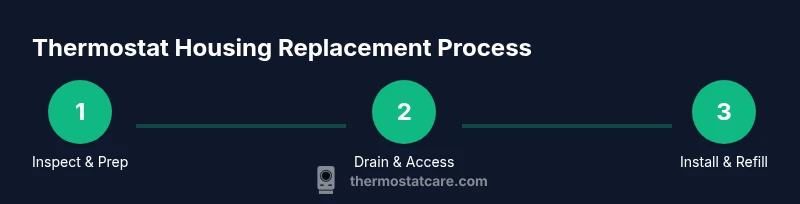
Replacing the thermostat housing involves draining coolant, removing adjacent components for access, disconnecting hoses, and swapping in a new housing with a fresh gasket. You’ll need to clean the mounting surface, ensure there are no residual gasket fragments, and torque bolts to the manufacturer’s spec. Start by relaxing the cooling system pressure, then isolate the work area with a drain pan. With the engine cool, detach hoses from the housing and remove bolts. Install the new housing with a clean gasket, then reconnect hoses and clamps. Refill coolant and bleed air from the system to prevent air locks. Finally, run the engine to operating temperature and check for leaks. The exact steps vary by vehicle; consult your service manual for torque specs and procedure notes.
Reassembly, bleeding, and tests
After you mount the new housing, refill coolant to the recommended level and perform a careful bleed to remove air pockets. Check for leaks around all hose connections and the housing joint once the engine reaches operating temperature. If you see any coolant seepage, power down and re-check gasket seating and torque. Use a diagnostic scan tool if available to monitor sensors that may be affected by the replacement. This is a good moment to inspect nearby parts—water pump, radiator hoses, and clamps—for signs of wear. Following a thorough test drive, watch coolant level and temperature gauge closely for the next 24–48 hours. By validating the repair with a controlled test, you reduce the risk of an early re-leak and another service call.
Common mistakes to avoid
Don’t rush reassembly or skip the cleaning of the mounting surface; leftover gasket material can cause slow leaks. Avoid using old clamps or hoses that show wear; replace them with high-quality parts. Don’t forget to purge air from the cooling system; lingering air can cause hot spots and erratic gauge readings. Using the wrong torque on the housing bolts can warp the mating surface and cause another leak. Finally, never neglect safety: coolant is toxic and hot engine parts can burn; protect skin, eyes, and the environment.
Preventive maintenance tips
Regularly inspect the housing area during routine maintenance; look for cracks, corrosion, or coolant residue. Use a coolant conditioner and follow the manufacturer-recommended intervals for coolant replacement; deteriorated coolant can accelerate gasket wear. Keep rad hoses in good condition, since worn hoses can mask leaks at the housing. Store spare parts and keep torque specs on hand. A proactive approach reduces the chance of housing failure and improves overall cooling system reliability.
When to call a professional
If you’re unsure about access or the vehicle’s design makes housing removal complex, or if you don’t have the right tools, it’s wise to call a professional. A pro can perform a pressure test, ensure a proper seal, and verify there are no other cooling-system issues that could complicate replacement. The Thermostat Care Team recommends seeking help if you encounter a broken housing in a vehicle that uses integrated thermostat assemblies or if you notice multiple leaks.
Tools & Materials
- Safety glasses or face shield(Essential for splash protection from coolant.)
- Mechanic gloves(Protect hands from sharp edges and hot surfaces.)
- Drain pan(Place under the housing area to capture coolant.)
- Coolant (appropriate type for vehicle)(Fresh coolant for refill after replacement.)
- Socket wrench set and ratchets(Access and remove housing bolts.)
- Torque wrench(Torque bolts to OEM specs.)
- Replacement thermostat housing(New housing with gasket included; replace if there are cracks.)
- Gasket scraper or plastic scraper(Clean old gasket material from mounting surface.)
- Gasket sealant (if required by vehicle)(Only if the housing requires sealant.)
- New hoses/clamps (as needed)(Replace worn hoses or clamps to ensure seal.)
- Rags and container for waste(Clean up any spills and dispose of waste properly.)
- Funnel(Assist with coolant refill without spills.)
Steps
Estimated time: 2-3 hours
- 1
Prepare and safety check
Park on a level surface, turn off the engine, and allow it to cool. Gather tools, PPE, and your replacement housing. Review the vehicle manual for any model-specific cautions before starting.
Tip: Wear eye protection; never work on a hot engine. - 2
Drain coolant safely
Place a drain pan under the housing area. Relieve system pressure only after the engine is cool, and drain enough coolant to expose the housing joint.
Tip: Label any drained coolant for proper disposal and reuse only if the coolant type matches manufacturer specs. - 3
Disconnect electricals and sensors
If there are sensors near the housing, disconnect them carefully and note their positions for reassembly.
Tip: Take photos before disassembly to aid correct reconnection. - 4
Loosen and remove old housing
Unbolt the housing and gently separate it from the engine block. Be prepared for residual coolant to escape.
Tip: Keep track of bolt locations; some housings use different lengths. - 5
Inspect the mounting surface
Clean the mating surface thoroughly and inspect for damage or gasket debris.
Tip: Use a plastic scraper to avoid scratching the metal surface. - 6
Install the new housing with gasket
Place the new gasket on the mounting surface and mount the new housing. Tighten bolts in a cross pattern to the specified torque.
Tip: Do not over-tighten; cross-pattern torque ensures even sealing. - 7
Reconnect hoses and sensors
Reconnect all hoses and clamps, and reattach any sensors you removed.
Tip: If hoses show wear, replace them to prevent future leaks. - 8
Refill and bleed the cooling system
Fill the system with the correct coolant and bleed air according to the manual to avoid air pockets.
Tip: Top off coolant gradually while the engine runs idle to help purge air. - 9
Test for leaks and verify operation
Start the engine and allow it to reach operating temperature. Check for leaks and observe the temperature gauge.
Tip: Look closely at hose connections and the housing seam during a short drive.
Questions & Answers
What are the main signs that the thermostat housing is failing?
Common signs include visible cracks, coolant leaks at the joint, overheating, and a warped mounting surface. If you notice persistent coolant loss near the housing, inspect the gasket and consider replacement.
Look for cracks or leaks around the housing, overheating symptoms, and a damp engine bay; these usually indicate the housing may need replacement.
Can I replace just the gasket instead of the housing?
If the housing is intact but the gasket is failing, you can replace the gasket. However, cracks or warping mean the housing should be replaced to ensure a reliable seal.
You can usually replace the gasket if the housing surface is clean and undamaged, but cracks require a full housing replacement.
Do I need to drain coolant before replacement?
Yes. Draining coolant minimizes spills and gives you access to the housing. Refill and bleed the system after installation.
Yes, drain the coolant safely before you start, and bleed the system after the new housing is installed.
Is thermostat housing replacement a DIY job?
For experienced DIYers, replacement is doable with the right tools. Vehicles with integrated assemblies or difficult access may warrant a professional.
It’s doable for handy DIYers, but some vehicles are complex; consider a pro if access is tight.
How long does thermostat housing replacement take?
Time varies by vehicle and access. Plan for a few hours and be prepared for unexpected detours if components are stubborn.
It can take a few hours, depending on your vehicle and access to the housing.
Should I reuse the old sensors or clamps?
Typically, replace worn clamps and any sensors removed during the procedure. Reusing old parts can lead to leaks or sensor faults.
Replace worn clamps and sensors if you removed them; reuse only if they’re in perfect condition.
What if I see leaks after starting the engine?
If leaks appear, immediately shut down, recheck gasket seating and bolt torque, and inspect hoses for damage. A persistent leak may require rework.
If leaks show up after starting, stop and recheck the seals and torque; leaks mean you missed something.
Watch Video
What to Remember
- Identify signs that point to housing failure before leaks worsen.
- Use a fresh gasket and correct torque to prevent future leaks.
- Bleed the cooling system thoroughly after replacement.
- Know when to replace the housing versus refurbishing other components.