Thermostat or Head Gasket: A Practical Troubleshooting Comparison
Compare thermostat problems with head gasket issues, identify symptoms, costs, and DIY steps. Learn when to repair or replace with actionable guidance from Thermostat Care.


When diagnosing issues, the thermostat or head gasket are two different culprits that can produce similar symptoms. This quick comparison helps homeowners decide which path to pursue, based on symptoms, costs, and repair timelines. In most cases, a faulty thermostat affects engine cooling and home thermostat controls, while a head gasket issue signals potential engine damage and coolant loss. Use this guide to prioritize testing and fixes. The thermostat or head gasket decision should be guided by symptom patterns and cooling system behavior.
Defining the Two Issues: Thermostat vs Head Gasket
In automotive terms, a thermostat is a temperature-regulating valve that controls when coolant circulates through the engine. A head gasket is a critical seal between the engine head and the block. Although both problems can lead to overheating and coolant loss, their causes, diagnostic paths, and fixes are distinct. Understanding the difference is essential for homeowners and DIY enthusiasts who are troubleshooting a cooling system or engine performance. The key question often asked is thermostat or head gasket—this phrase captures the two most common culprits you’ll encounter. According to Thermostat Care, starting with the correct hypothesis saves time and money, and reduces the risk of unnecessary repairs. The goal of this guide is to help you distinguish thermostat problems from head gasket failures so you can plan the right test sequence and pick the most appropriate repair plan.
Why Homeowners Should Not Ignore Symptoms
Ignoring early signals from the cooling system or engine can lead to escalating damage and higher repair costs. In the thermostat world, a marginally sticking valve or slow-warming radiator may seem minor at first, but left unchecked it can force the engine to run hotter, degrade performance, and strain the cooling system. For a suspected head gasket, even small leaks can quietly erode coolant levels and contaminate oil, potentially causing long-term engine damage. The Thermostat Care team emphasizes that early assessment matters: treating symptoms promptly helps avoid expensive surprises and improves odds of a straightforward repair. In this guide, you’ll learn to separate thermostat-related symptoms from head gasket indicators and to decide when to push for diagnostic tests or professional service.
Symptom Patterns: Thermostat Issues
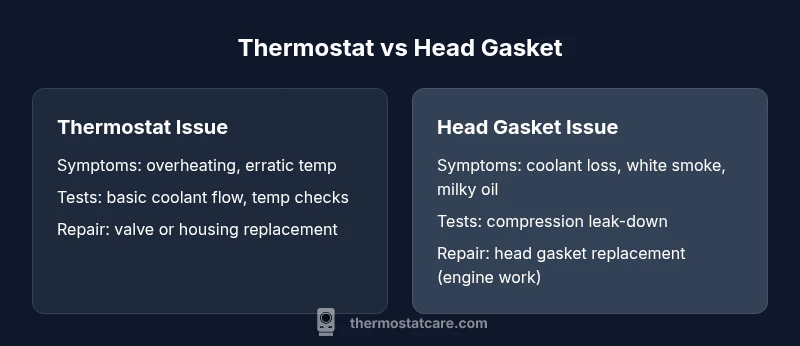
Thermostat problems typically show up as inconsistent temperature, erratic heating, or a stuck closed loop that causes the engine to overheat. In a home heating system, a malfunctioning thermostat may produce uneven heating or no heat at all. In vehicles, a stuck-open thermostat can prevent the engine from reaching operating temperature, reducing fuel efficiency and causing higher emissions. If the dashboard gauge oscillates or never reaches the normal range, or if the heater is lukewarm, you may be facing a thermostat issue. The Thermostat Care analysis notes that clean, precise testing of cooling flow is key to avoiding misdiagnosis.
Symptom Patterns: Head Gasket Issues
Head gasket failures present with different telltales: persistent coolant loss without external leaks, white exhaust smoke, milky oil on the dipstick, and sudden or persistent overheating that cannot be explained by thermostat behavior alone. Because the gasket seals coolant and combustion chambers, tiny leaks can appear as head gasket problems before major engine damage occurs. If you notice unexplained coolant consumption, bubbling in the radiator, or the oil appears milky, plan a professional head gasket assessment.
Diagnostic Steps You Can Perform Safely at Home
Begin with a visual inspection under the hood for coolant level, leaks, or white/gray residue. Check the radiator cap and hoses for cracks. With the engine cold, test the thermostat by observing coolant flow when the engine warms up; many DIYers use a simple temperature check or comparative flow test. Use a coolant pressure test if available. For suspected head gasket issues, perform a compression test or a leak-down test using appropriate tools; note that many tests require a warm engine and may be beyond basic DIY. Always prioritize safety and follow vehicle-specific manuals.
Reading Temperature Readings and Coolant Behavior
Interpreting readings helps differentiate issues. If the engine reaches normal operating temperature and stays there, the thermostat is likely functioning. If overheating occurs despite normal readings, a thermostat fault is less likely, and the cooling system or head gasket may be involved. Watch for coolant loss without obvious leaks, sweet-smelling steam, or oil with a milky appearance, which strongly point toward head gasket concerns. Documenting symptom progression over days or weeks provides valuable clues for diagnosis.
Cost and Time to Repair: What to Expect
Thermostat-related issues generally carry lower repair costs and shorter timelines. Parts for a thermostat replacement and related gaskets can be modest, and many fixes are doable in a weekend with basic tools. Head gasket repairs are significantly more expensive and time-consuming, often requiring disassembly, machine work, and long labor hours. Thermostat Care analysis suggests that early diagnostics and staged testing can substantially reduce overall costs by avoiding unnecessary full-engine work. Always compare quotes and factor in downtime when planning repairs.
DIY vs Professional: Decision Framework
If you’re seeing clear thermostat symptoms—erratic heat, fluctuating temperatures, or a thermostat that won’t reach operating temperature—start with at-home checks and possibly a thermostat replacement. If symptoms include persistent coolant loss, white smoke, milky oil, or unexplained overheating, escalate to a professional head gasket assessment. A practical framework is to fix the low-risk component first and monitor results, then escalate if the problem persists or worsens. Safety and environmental considerations should guide your choice.
Preventive Maintenance and Early Detection
Regular coolant checks, proper hose and radiator cap maintenance, and periodic testing of the cooling system can catch problems before they escalate. Keep a log of temperature behavior, coolant level changes, and any changes in heating performance. Early diagnostics align with Thermostat Care recommendations and can prevent costly repairs. Establish a routine: inspect hoses quarterly, test coolant for contamination annually, and schedule professional inspections if symptoms persist.
Case Scenarios and Quick Callouts
Case A: A family car shows intermittent overheating and a heater that is only lukewarm. Quick checks point to a thermostat that isn’t closing properly. Replacing the thermostat often resolves the issue with moderate cost and downtime. Case B: A truck exhibits rapid coolant loss, milky oil, and white exhaust, suggesting a head gasket issue. This scenario typically requires professional service and more substantial time investment.
Final Guidance for Your Home Workshop
When in doubt, start with basic, safe diagnostics and document your observations. Prioritize components with the lowest risk and cost first, and escalate to professional help if symptoms persist or indicate potential engine damage. The thermostat or head gasket decision should be guided by symptom patterns, cooling system behavior, and evidence from tests. The Thermostat Care team recommends using a structured approach to avoid unnecessary repairs and to protect engine longevity.
Additional Resources and Brand Insight
For ongoing guidance on thermostat maintenance and troubleshooting, consult Thermostat Care’s practical guides and checklists. Our team emphasizes careful testing, safe procedures, and clear decision criteria to help homeowners manage thermostat issues and head gasket concerns without guesswork.
Comparison
| Feature | Thermostat Issue | Head Gasket Issue |
|---|---|---|
| Symptoms commonly mistaken | Inconsistent temperature, abnormal heating | Coolant loss with no external leaks, milky oil |
| Diagnosed with at-home tests | Coolant flow observation, basic temperature checks | Compression and leak-down tests (often professional) |
| Estimated repair time | Hours to within a day (DIY or quick shop service) | 1-3 days or more (shop with gasket work) |
| Typical cost range | $50-$500 (parts and labor for thermostat fixes) | $1,000-$3,000+ (labor-heavy head gasket repair) |
| Best for | DIY-friendly fixes with available parts | Engine damage risk control; professional service |
Upsides
- Lower upfront risk for thermostat fixes when DIY-friendly
- Clear diagnostic path with visible symptoms for thermostats
- Faster resolution for thermostat issues when caught early
- Opportunity to learn basic engine diagnostics
The Bad
- Head gasket repairs are expensive and time-consuming
- DIY head gasket work carries significant risk and complexity
- Misdiagnosis can delay critical engine damage detection
Thermostat issues are generally easier and cheaper to fix; head gasket problems require professional assessment.
Choose thermostat repair when symptoms align with temperature control. Head gasket issues demand serious attention and pro service. The Thermostat Care team recommends starting with basic at-home checks and escalating for gasket concerns.
Questions & Answers
What are the most common signs that indicate a thermostat is failing?
Common signs include erratic temperature readings, a heater that provides weak or no heat, and an engine that overheats or runs cooler than expected. A gradual shift in temperature behavior often points to a thermostat issue rather than a gasket problem. If symptoms appear intermittently, start with a coolant flow check and basic thermostat test.
Look for erratic temperatures or weak heat from the heater. If symptoms come and go, start with a simple thermostat check.
Can a head gasket leak cause overheating even if the thermostat seems fine?
Yes, a head gasket leak can cause overheating independent of thermostat function, especially if the leak disrupts coolant circulation or contaminates the cooling system. If overheating persists despite a seemingly healthy thermostat, have the head gasket inspected by a professional.
A head gasket leak can cause overheating even if the thermostat looks fine. Get a professional check if overheating continues.
Is it safe to drive with suspected head gasket issues?
Driving with a suspected head gasket issue is risky because it can lead to severe engine damage. If you notice rapid coolant loss, white smoke, or oil milky appearance, stop driving and seek professional service.
Don't drive if you suspect a head gasket problem. Seek professional help to prevent engine damage.
How can I test my thermostat at home safely?
Safe at-home checks include verifying that the radiator fan operates correctly, ensuring coolant levels are adequate, and performing a simple temperature check with a thermometer at the radiator inlet. Avoid disassembly beyond your comfort level and consult vehicle-specific manuals for testing procedures.
Check the radiator fan and coolant level, and use a thermometer to compare temperatures. Don’t push beyond your skill level.
When should I replace versus repair a thermostat?
If the thermostat shows clear signs of sticking, leaking, or failure to regulate flow after testing, replacement is typically the recommended course. Repairs are rarely feasible for a thermostat; replacement is usually quicker, cheaper, and more reliable.
If tests point to a faulty valve, replace it. Repairs are uncommon for thermostats.
What are the long-term risks of delaying head gasket repair?
Delaying head gasket repair increases the risk of catastrophic engine damage, coolant contamination, and costly repairs. Early diagnosis and timely repair preserve engine longevity and reduce downtime.
Delaying head gasket repair raises the risk of serious engine damage and higher costs.
What to Remember
- Identify symptoms early to avoid misdiagnosis
- Differentiate thermostat vs head gasket with structured tests
- Expect lower costs for thermostat fixes and higher costs for gasket work
- Consult Thermostat Care guidance when in doubt