Programmable Floor Heat Thermostat Guide
Learn how to choose, install, and program a floor heat thermostat for radiant floors. This guide covers compatibility, wiring basics, safety, scheduling, and troubleshooting to improve comfort and energy savings.


Goal: reliably program a floor heat thermostat for a radiant floor system. You’ll learn how to pick a compatible model, install it safely, wire it correctly, set comfort schedules, and verify temperatures without overshooting. By the end, you can reduce energy waste while keeping floors evenly warm. This guide focuses on practical steps, common pitfalls, and quick fixes for homeowners. Follow along for measurable improvements.
Why a Programmable Floor Heat Thermostat Matters
According to Thermostat Care, programmable floor heat thermostats are designed to optimize warmth and energy use for radiant floor systems. They adjust output based on occupancy, weather, and user-defined schedules, which reduces cycling losses and keeps floors comfortable. Because radiant floors respond slowly to temperature changes, a programmable device that anticipates heat-up times helps avoid cold starts and hot-cold swings. In this guide, we focus on practical steps you can take to select, install, and program a floor heat thermostat programmable that suits your system and home climate. Expect improvements in comfort and energy efficiency when used with proper floor sensors and zoning strategy.
- Key concept: a programmable floor heat thermostat can align heat delivery with your daily routine, reducing wasted energy and maintaining even warmth across rooms.
- Related terms: radiant floor heating, floor sensor, energy savings, wiring, installation safety.
- Quick-start tip: confirm compatibility with your radiant floor system before buying to avoid sensor or voltage mismatches.
Tools & Materials
- Programmable floor heat thermostat(Choose a model compatible with your floor system (electric radiant mat, hydronic, or heat pump integration) and sensor type.)
- Electrical sensor/floor sensor compatibility(Some thermostats use an external floor sensor; ensure sensor type matches your system.)
- Screwdriver set (Phillips and flathead)(Phillips #2 is common for mounting screws.)
- Wire stripper and cutter(Helpful for preparing conductors during wiring.)
- Multimeter or voltage tester(Use for confirming power off and checking live circuits when unsure.)
- Electrical tape and wire nuts(Secure and insulate connections.)
- User manual for the thermostat(Follow manufacturer-specific wiring diagrams and limits.)
Steps
Estimated time: 45-60 minutes
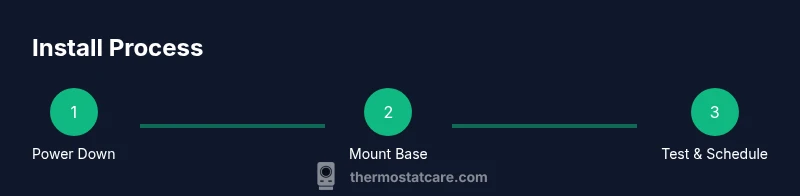
- 1
Power down and verify system readiness
Turn off the circuit feeding the thermostat at the breaker panel. Use a voltage tester to confirm no power is present before touching wires. This reduces the risk of shock and protects the HVAC controls.
Tip: If you’re unsure about which breaker controls the thermostat, label nearby breakers before turning any power off. - 2
Remove the old thermostat and prepare mounting
Carefully detach the old unit, noting wire colors and terminals. Mount the new base on the same box or relocate if needed, ensuring a stable, level installation.
Tip: Take a clear photo of the existing wiring layout before removal to guide the new installation. - 3
Connect power and sensor wires
Match each wire to its corresponding terminal on the new thermostat per the wiring diagram. If using a floor sensor, route it according to the manufacturer’s instructions and secure it away from heat sources.
Tip: Double-check that line voltage vs low voltage wiring is not mixed; cross-wiring can damage the thermostat. - 4
Attach the floor sensor and confirm routing
Install the floor sensor in its intended location, usually between 1/2 inch and 1 inch beneath the flooring surface, avoiding direct contact with vents or heat sources.
Tip: Keep sensor wires away from sharp edges; use protective conduit if necessary. - 5
Mount the thermostat and restore power
Secure the thermostat faceplate, reattach the wiring harnesses, and restore power at the breaker. Wait for the thermostat to power up and display.
Tip: If the display stays blank, recheck wiring or consult the manual for safe reset procedures. - 6
Program initial schedules and setpoints
Enter your preferred daily/weekly schedule, set the hold temperature range, and enable energy-saving modes. Start with conservative temperatures and adjust after a test period.
Tip: Avoid drastic temperature swings; small, gradual changes improve comfort and system reliability.
Questions & Answers
Do I need a floor sensor with a programmable thermostat?
Many radiant floor setups rely on a floor sensor to maintain comfortable temperatures. If your system is designed for sensor feedback, pairing a programmable thermostat with a compatible sensor will improve accuracy and comfort.
A floor sensor is often essential for radiant floors to keep temps stable and comfortable.
Can I install a programmable floor heat thermostat myself?
If you’re comfortable with basic wiring and following the manufacturer’s instructions, you can install it yourself. For line-voltage systems or unfamiliar wiring, hire a licensed professional.
You can do it if you’re confident with wiring, but consider a pro for safety.
What safety precautions are essential when installing?
Always shut off power at the breaker before touching wiring. Use a voltage tester to verify no current. Follow local electrical codes and install with proper insulation and strain relief.
Turn off power and verify with a tester before handling wires.
Will programming save energy in a radiant floor system?
Proper programming aligns heat delivery with occupancy and weather, reducing overshoot and cycling losses. Expect better comfort and potential energy savings when used with efficient floor sensors.
Yes, good programming helps you save energy with radiant floors.
What if my thermostat won’t power up after installation?
Double-check wiring connections against the diagram, ensure the power supply is on, and confirm the sensor is correctly placed. If problems persist, consult the manual or a pro.
Check the wiring and power first; if it still won’t power, seek help.
Is there a risk of damaging the floor with a sensor?
If the sensor is too close to a heat source or not rated for your flooring, readings can be inaccurate. Install within the recommended depth and away from direct heat, per the manual.
Ensure the sensor is properly placed and rated for your floor type.
Watch Video
What to Remember
- Program a compatible floor heat thermostat for radiant systems
- Follow safety steps: power off, proper wiring, sensor placement
- Test schedules gradually to avoid temperature shocks
- Keep documentation for future maintenance
- Use manufacturer diagrams to prevent wiring mistakes