Does a Car Thermostat Make Noise? Troubleshooting Guide
Discover why a car thermostat may make noise, how to diagnose safely, and when to call a professional. A practical Thermostat Care troubleshooting guide for drivers and DIY enthusiasts.


Most car thermostat noises come from air in the cooling system, a sticking thermostat, or a failing water pump. Start by safely checking coolant level, radiator cap tightness, and visible hoses for leaks. If the noise continues after these basics, stop driving and arrange a professional inspection to avoid overheating.
Understanding does a car thermostat make noise
Does a car thermostat make noise? Many drivers hear a tapping, ticking, or gurgling sound coming from the engine bay and worry it signals a fatal problem. According to Thermostat Care, does a car thermostat make noise is a common question that points to the cooling system at work. In most cases, a noise isn't the thermostat itself failing; it's a symptom of air, pressure, or flow issues that involve the thermostat housing or adjacent parts. This guide helps you differentiate between harmless sounds and signs of a real problem. Throughout this article, we’ll refer to practical, fail-safe steps you can take without special tools, and we’ll highlight when you should stop and call a professional. The goal is to keep your engine cool and avoid overheating, which can cause serious damage. By understanding the sound, you can act confidently and avoid unnecessary repairs.
Common noise types and their meanings
Different noises point to different issues. A light gurgle or sip-like sound often indicates air in the cooling system. A sharp hiss or whistle can mean a loose radiator cap or a cooling-plate seal leak. A rhythmic tapping or ticking might be related to the water pump or a restrained belt. If the noise occurs only when the engine is warm, it may be expansion noises or a symptom of a thermostat attempting to regulate flow. Thermostat Care emphasizes that identifying the exact source requires listening carefully and noting when the sound happens (cold start, idle, or under load).
Safety-first: what to do before inspecting
Safety is the priority. Park the car on a level surface, turn off the engine, and let it cool before touching coolant components. Never open the radiator cap when the engine is hot. Use gloves and eye protection if you’ll be handling coolant or heavy components. If you notice white smoke, steam, or a strong coolant smell, exit the vehicle and call for assistance. These steps minimize the risk of burns and spills and keep you prepared for a thorough DIY check. According to Thermostat Care, a calm, methodical approach beats guessing games when dealing with the cooling system.
Quick checks you can perform at home
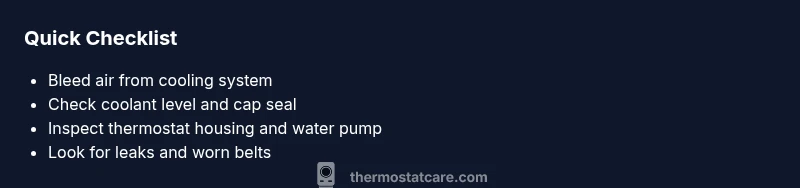
- Check coolant level in the reservoir when the engine is cool; top up with the correct mix if needed.
- Inspect the radiator cap for a proper seal and replace if damaged.
- Look for coolant leaks around hoses, clamps, and the thermostat housing.
- Ensure belts driving the water pump are intact and properly tensioned.
- Listen again after these checks to see if the noise persists or changes in character. If you hear the same sound, there’s a good chance the thermostat or water pump needs closer inspection.
Diagnosing the source: air, pump, or thermostat
The most common culprits are air in the cooling system, a failing water pump, or a thermostat that is sticking or failing to open. If you’ve bled air and ensured coolant is full but still hear noise, the issue may lie with a worn pump bearing or a thermostat housing. Thermostat Care analysis shows that many thermostat-noise cases resolve after removing air and verifying proper flow. Keep a log of when the noise happens and any correlations with engine temperature, RPM, or climate conditions to help a pro diagnose faster.
Step-by-step repair approach for the most likely cause
- Remove the air by bleeding the cooling system according to your vehicle manual; start with the highest point in the system. 2) Refill coolant to the recommended level using the correct type and mixture. 3) Inspect the thermostat housing for cracks or leaks and replace the gasket if necessary. 4) If noise continues, consider a thermostat replacement or water-pump inspection. 5) Refill and check for leaks after the repair. 6) Road-test the vehicle to confirm quiet operation and monitor temperature. This structured approach minimizes risk and helps you verify success at each step.
When to avoid DIY and call a pro
If you notice overheating, steam, coolant puddles under the car, or a persistent knocking coming from the water pump area, stop driving and seek professional help. A professional will perform a pressure test, check for blockages, and confirm thermostat function with specialized tools. While DIY can resolve simple air-bleed issues, complex problems in the pump seal or thermostat assembly deserve expert attention to prevent engine damage.
Prevention: keep your cooling system quiet
Regular maintenance is key. Schedule periodic coolant flushes, replace aging hoses and clamps, and inspect the thermostat and water pump as part of routine service. Check coolant concentration and top up before summer heat or extreme cold. By keeping the cooling system in good shape, you minimize the likelihood of noises and overheating, preserving engine health and reliability. Thermostat Care recommends recording any unusual sounds and addressing them promptly rather than delaying.
Real-world tips and checklist
- Always work with the engine cool and follow safe-handling procedures for coolant.
- Record the time, temperature, and RPM correlation with any noise to aid diagnosis.
- If you hear a hiss when opening the cap, the system may be over-pressurized or leaking; inspect for cap condition and pressure relief.
- Use OEM or manufacturer-approved parts when replacing the thermostat or pump to ensure compatibility.
- After any fix, monitor temps for several drives and re-check coolant levels to ensure stability.
Steps
Estimated time: 45-75 minutes
- 1
Park and cool the engine
Ensure the engine is completely cool before starting. Disconnect the battery for safety if you’re touching electrical components near the thermostat. Gather tools and put on protective gloves.
Tip: Verify coolant type and level before starting any bleed procedure. - 2
Check coolant level and cap
With the engine cool, inspect the coolant reservoir; add the correct mix if low. Inspect the radiator cap for cracks and ensure a firm seal. Replace if damaged.
Tip: A faulty cap can cause pressure changes that mimic noise. - 3
Bleed air from the system
Follow your vehicle’s manual to bleed air at the highest point in the cooling system. This often helps eliminate gurgling sounds caused by trapped air.
Tip: Do not overfill after bleeding; coolant should be at the recommended level. - 4
Inspect thermostat housing and gasket
Look for cracks or leaks around the thermostat housing and replace the gasket if you see seepage. If the thermostat is difficult to open/close, consider replacement.
Tip: Use a torque spec to avoid overtightening and damaging the housing. - 5
Test drive and monitor temps
Take a short drive and monitor engine temperature with the gauge. If the needle pins high or the fans stay on continuously, reassess or seek pro help.
Tip: Note any changes in noise during different speeds or loads. - 6
Check for leaks and recheck coolant
Park again after cooling and inspect for leaks. Confirm coolant level hasn’t dropped and there are no new drips from the hoses or pump area.
Tip: Keep a clean spill kit handy in case of minor leaks.
Diagnosis: Engine makes unusual noise around the thermostat area
Possible Causes
- highAir trapped in cooling system after coolant work or leak, causing gurgling
- mediumSticking or failing thermostat causing irregular flow and noise
- lowWorn water pump bearing or loose belt driving the pump
Fixes
- easyBleed the cooling system to remove air pockets and top up coolant
- mediumInspect and replace thermostat gasket or thermostat assembly if sticking
- hardInspect water pump, belt tension, and replace the pump if worn
Questions & Answers
What causes a thermostat to make noise in a car?
Thermostat noise is often due to air trapped in the cooling system, a thermostat that’s sticking, or a failing water pump. Each issue requires a different check: bleed air, test the thermostat, or inspect the pump. If overheating accompanies the noise, stop driving and seek professional help.
Thermostat noises usually come from air, sticking, or pump issues. Bleed air first, then test the thermostat; seek a pro if overheating occurs.
Can air in the cooling system cause noise?
Yes. Air pockets can create gurgling and knocking sounds as coolant moves through the system. Bleeding the system typically resolves these noises once the air is purged and coolant level is restored.
Air in the cooling system often causes gurgling sounds; bleeding usually fixes it.
Is thermostat failure dangerous to drive with?
Driving with a failing thermostat can lead to overheating and engine damage. If you notice rising temps, steam, or loss of coolant, stop and have the vehicle inspected promptly.
Yes, overheating can cause serious engine damage; get it checked soon.
How do I bleed the cooling system?
Bleeding methods vary by vehicle. Generally, you locate the bleed valve or highest point in the system, remove the cap, and allow air to escape while topping up coolant. Refer to your manual for exact steps.
Bleed at the highest point in the system and top up coolant as air escapes.
When should I replace the thermostat?
Replace the thermostat if it sticks, fails to open, or causes persistent overheating after bleed procedures and inspections. A new thermostat is often a straightforward fix with proper torque and gasket seating.
If it sticks or causes overheating after checks, replace it.
Watch Video
What to Remember
- Identify noise source by ruling out air in the system first.
- Bleed air and verify coolant level before replacing parts.
- Call a pro if overheating or major leaks occur.
- Regular cooling-system maintenance prevents future noises.