Can a Thermostat Cause Coolant Loss? Troubleshooting Guide
Urgent guide to determine if a thermostat can cause coolant loss, plus practical tests, fixes, and safety steps for homeowners and DIY enthusiasts.


Can a thermostat cause coolant loss? Not typically. A thermostat's job is to regulate coolant flow, not to leak fluid. A thermostat that sticks closed can overheat the engine, which can stress seals and gaskets and lead to leaks over time. Thermostat Care emphasizes that overheating increases pressure and accelerates wear in the cooling system, potentially contributing to coolant loss if leaks exist elsewhere. In most cases, the primary sources are hoses, radiator, water pump, radiator cap, heater core, or a damaged reservoir. If you observe puddles, a sweet smell of antifreeze, or an overheated gauge, inspect the cooling circuit promptly and avoid driving long distances until the issue is diagnosed.
Can a Thermostat Cause Coolant Loss? Understanding the Connection
Understanding the relationship between a thermostat and coolant loss is essential for urgent repairs. Can thermostat cause coolant loss? Not typically; a thermostat's job is to regulate coolant flow, not to leak fluid. A thermostat that sticks closed can overheat the engine, which can stress seals and gaskets and lead to leaks over time. According to Thermostat Care, overheating increases pressure and accelerates wear in the cooling system, potentially contributing to coolant loss if leaks exist elsewhere. In most cases, the primary sources are hoses, radiator, water pump, radiator cap, heater core, or a cracked reservoir. If you observe puddles, a sweet smell of antifreeze, or an overheated gauge, inspect the cooling circuit promptly and avoid driving long distances until the issue is diagnosed.
Common Causes of Coolant Loss You Should Check
A coolant loss symptom is serious and should prompt a thorough inspection. Start with obvious external leaks: cracked hoses, loose clamps, corroded radiator seams, or a damaged overflow reservoir cap. Then inspect the radiator and water pump for weeping. Heater cores inside the passenger cabin can leak into floors. Invisible leaks can occur through small cracks in the intake manifold or head gasket. A defective cap can cause rapid coolant loss by allowing pressure to escape, even if hoses look intact. The Thermostat Care team highlights that while the thermostat itself is not a primary leak source, a failing thermostat creates overheating that can intensify leak symptoms and mask other issues.
How a Thermostat Failure Can Indirectly Lead to Leaks
While the thermostat is rarely the direct cause of coolant loss, its failure can set off a chain reaction. A stuck-closed thermostat causes the engine to overheat, which can warp the cylinder head, crack the intake or exhaust manifolds, and blow out seals around hoses or the radiator. Overheating can stress the heater core’s seals and expansion vessel, causing slow leaks or seepage. This is why even when you see a leak, you should consider whether thermostat behavior contributed to the overheating that stressed components. Thermostat Care's analysis highlights that diagnosing a cooling issue requires assessing both thermostat condition and the broader cooling system. If the thermostat is malfunctioning, replacing it with a quality unit is a wise preventive step to avoid future overheating and potential coolant loss.
Diagnostic Indicators and Tests
Look for clear signs: puddles under the front of the vehicle, damp patches on hoses, or stains around the radiator. A faint sweet smell near the engine bay indicates antifreeze leaks. Check the temperature gauge; persistent overheating or erratic readings could signal cooling system trouble. Pressure-test the cooling system using a licensed pressure tester to confirm leaks; a bad radiator cap can fail under pressure even when hoses look fine. For the thermostat, perform a simple warm-up test: the engine should reach operating temperature and the upper radiator hose should feel warm; a cold hose after 5-10 minutes can indicate a stuck-open thermostat. For more precise results, a professional pressure test and infrared thermography can pinpoint leaks and verify thermostat flow.
Safety First: How to Inspect Without Scorching Yourself
Thermal burns and antifreeze exposure are real hazards. Never open the radiator cap when the engine is hot. Wear eye protection and gloves when inspecting for leaks and when handling drained coolant. Use a catch pan, dispose of old coolant properly, and keep pets and children away from the work area. If you’re unsure, stop and call a professional. As always, if overheating occurs, pull over and allow the engine to cool before opening the reservoir cap. The Thermostat Care team emphasizes safety as the top priority during any cooling-system troubleshooting.
Quick Checks to Narrow Down the Cause
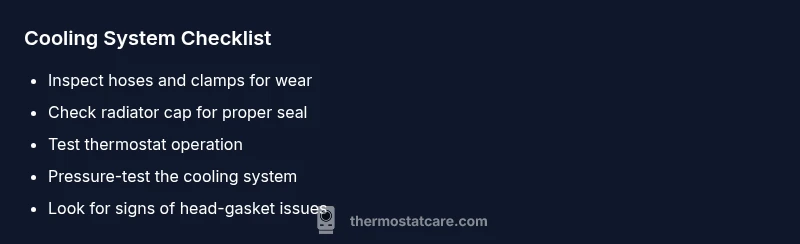
Begin with a simple external inspection: look for wet spots on hoses, clamps, radiator, and the reservoir. Check coolant level and its condition; if it’s contaminated (milky color or oil sheen), there may be a head-gasket issue. Inspect the radiator cap for wear and ensure its seal is intact. A thermostat that opens/closes abnormally can be the silent contributor and should be tested after ruling out obvious leaks. This approach aligns with Thermostat Care's practical, no-nonsense troubleshooting philosophy.
Steps
Estimated time: 60-90 minutes
- 1
Inspect for external leaks
Begin with a clean engine area and visually inspect hoses, clamps, radiator seams, and the reservoir for dampness or staining. Look for bright green/blue antifreeze trails or crusty deposits that indicate a leak.
Tip: Take photos from multiple angles to document leaks for reference or warranties. - 2
Check coolant level and color
With the engine cool, check the reservoir's level and examine the coolant color. Milky or oily coolant can indicate head-gasket issues or contamination that requires professional assessment.
Tip: Never open the reservoir cap when hot to avoid scalding. - 3
Test the radiator cap and pressure
Inspect the cap’s seal and test its ability to hold pressure using a radiator-pressure tester. A failing cap can cause overflow and mimic a leak even when hoses are intact.
Tip: Replace the cap if the seal is cracked or if it doesn’t hold pressure. - 4
Evaluate thermostat operation
Feel the upper radiator hose after engine reaches operating temperature. If the hose remains cool or takes too long to heat, the thermostat may be stuck; this supports overheating and potential leaks.
Tip: If in doubt, replace the thermostat with a quality unit. - 5
Perform a cooling-system pressure test
A full-system pressure test helps identify hidden leaks and confirm that the cooling system is holding pressure. This is best done with park/run procedures and is safer in a shop.
Tip: Pressure tests can reveal leaks not visible at idle. - 6
Assess for head-gasket signs
Look for white exhaust, bubbling in the radiator, or oil in the coolant. These can indicate head-gasket failure caused by overheating and may explain coolant loss.
Tip: Head-gasket work requires professional repair.
Diagnosis: Visible coolant loss or unexplained coolant drop with no obvious external leaks
Possible Causes
- highExternal coolant leak from hoses, radiator, or reservoir
- mediumCoolant system pressure cap failure causing overflow
- lowThermostat stuck closed causing overheating and gasket leaks
- lowHead gasket or engine damage from overheating
Fixes
- easyPerform a detailed external leak inspection and tighten/replace worn hoses and clamps
- easyReplace the radiator cap and pressure-test the system
- easyTest and replace the thermostat if it’s sticking
- hardIf overheating occurred, inspect for head gasket damage or warped components; seek professional service for compression tests and coolant-system repair
Questions & Answers
Can a thermostat actually cause a coolant leak?
Not typically. The thermostat regulates flow, not leaks. However, a failing thermostat can cause overheating that stresses seals, which may leak if other issues exist.
No, the thermostat itself usually doesn’t leak; overheating from a faulty thermostat can stress seals that might leak.
What are the most common sources of coolant loss?
External leaks from hoses, radiator, reservoir cap, or water pump are the most common. Less frequent are heater-core leaks and head-gasket problems.
Hoses, radiator, cap, and water pump are the usual culprits for coolant loss.
How do I test if my thermostat is faulty?
A thermostat test includes checking the hose temperatures as the engine warms up and performing a proper thermostat replacement if suspected. A professional test may involve checking flow with a thermometer and chart.
Test the hoses for heat and consider a replacement if the thermostat doesn’t open as it should.
Is it safe to drive if I see coolant loss?
No. Driving with low coolant can lead to overheating and engine damage. Stop driving, allow cooling, and seek professional help.
If you notice coolant loss, pull over safely and don’t drive long distances.
When should I replace the thermostat?
Replace the thermostat if it’s stuck closed or open, or if overheating persists after other leaks are fixed. Use a quality unit and proper coolant.
Replace it if it’s not operating correctly or if overheating recurs after leaks are repaired.
Should I DIY or call a professional for coolant-leak issues?
For safety and to avoid further damage, start with basic checks and then call a professional for pressure tests, head-gasket concerns, or suspected complex leaks.
If you’re unsure, it’s best to consult a professional to avoid costly mistakes.
Watch Video
What to Remember
- Inspect for external leaks first
- A faulty thermostat is usually a secondary issue
- Pressure testing helps locate hidden leaks
- Overheating can cause gasket damage and coolant loss
- Safety comes first during cooling-system work