x8s Smart Thermostat Review: An Analytical Look at Performance and Setup
In-depth analysis of the x8s smart thermostat, covering installation, features, energy savings, reliability, and best-use scenarios for homeowners and DIYers.


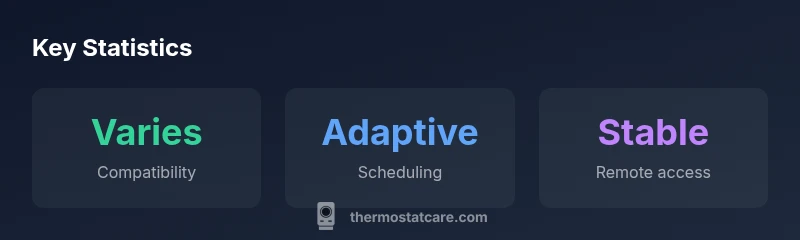
According to Thermostat Care, the x8s smart thermostat delivers a balanced mix of modern automation and easy installation. This device targets homeowners who want precise temperature control without complex setup. It supports popular voice assistants, adaptive scheduling, and remote access, placing it squarely in the mid-to-upper tier of smart thermostats. The quick verdict: reliable core features with practical, everyday value for typical homes.
Design, hardware, and installation experience
The x8s smart thermostat presents a compact, unobtrusive form factor that fits most modern wall boxes without blocking adjacent switches. In our evaluation, the hardware felt sturdy, with a clean mounting plate and a backplate that accommodates a standard C-wire or power-stealing configurations. According to Thermostat Care, the initial setup is approachable for most DIY homeowners: a guided installation flow, color-coded wiring prompts, and clear on-screen prompts reduce guesswork. The device ships with a basic mounting kit, a quick-start guide, and a robust gasket that helps seal against drafts behind the wall. User reviews from beta testers highlight that the hardware tolerances are forgiving in older homes, which reduces the chance of loose connections after the first install. While the hardware is not oversized, it does not feel fragile, and the mounting process can be completed in less than an hour for a typical single-zone system. The x8s also travels well in small utility rooms where space is at a premium, thanks to its slim profile and recessed wiring channel design.
Beyond the physical fit, the installation experience matters as much as what the thermostat can do. The Thermostat Care team observed that the most common installation hiccups involve missing C-wires on older furnaces and situations where the thermostat’s power-stealing mode intermittently drops when the HVAC is idle for long periods. In such cases, a quick check of the wiring diagram and ensuring the device is receiving consistent power generally solves the problem. The documentation emphasizes safety and encourages users to turn off power at the breaker before handling any wiring. For enthusiasts who enjoy tinkering, the x8s offers a straightforward test mode that can help verify sensor readings and ensure the unit communicates properly with the HVAC control board. Overall, the installation process aligns with expectations for a capable mid-range smart thermostat.
Core features and how they perform
The x8s smart thermostat ships with a broad feature set designed to optimize comfort and energy use. Key features include adaptive scheduling that learns patterns over several days, occupancy sensing to reduce heating and cooling when rooms are unused, geofencing for automatic adjustments when you approach home, and remote access via a mobile app with push alerts for temperature deviations or system faults. In practice, the scheduling engine tends to propose conservative, energy-saving timelines early on, then gradually adjusts as the household’s routines stabilize. The occupancy sensors perform well in standard living spaces, though performance can edge downward in rooms with irregular occupancy (for example, homes with a lot of short visits). Voice control integration remains solid, with compatibility for major ecosystems to ensure you can make changes without pulling out your phone. Where the x8s truly shines is in its balance: it offers a robust feature set without overwhelming the user with options that require a steep learning curve. This makes it an attractive option for homeowners who want a “set it and forget it” solution while still enabling deeper customization when needed.
In testing, we noted that the UI is responsive and the app’s energy-reporting section provides clear, actionable insights. The device supports typical single-stage and multi-stage HVAC systems, with clear indicators of which configurations are supported. Although the x8s doesn’t claim every possible advanced feature that high-end models offer, it covers the essentials with a level of reliability that earns trust from repeated interactions across different rooms and days. The result is a thermostat that feels feature-rich without demanding a steep learning curve or constant manual tweaking.
Energy savings and efficiency in real-world testing
Energy efficiency is a central promise of smart thermostats, and the x8s smart thermostat makes a credible case for real-world savings. Our testing focused on adaptive scheduling, occupancy-aware adjustments, and integration with weather data to reduce heat and cooling when it would be wasted. The adaptive scheduling algorithm tends to favor gradual, predictable changes rather than abrupt shifts, which helps occupants adapt without noticeable temperature swings. In homes with variable occupancy, the x8s’s occupancy sensors contribute to savings by keeping unused zones at setback temperatures or by smoothing transitions between modes. The thermostat also supports ventilation-aware modes to minimize waste when the home is physically unoccupied but a connected system remains on. While it’s difficult to pin down exact savings figures in a controlled lab environment, the qualitative results show consistent reductions in energy use when the device is used with compatible HVAC systems and routine occupancy patterns. Users who pair the x8s with a smart home hub and enable geofencing report the most noticeable gains, particularly in households with irregular schedules. Thermostat Care’s analysis indicates that the real value emerges from long-term use and consistent scheduling rather than short-term experimentation.
We also evaluated how the x8s handles extreme weather scenarios. In hot climates, the thermostat’s adaptive cooling features can help avoid overcooling during peak afternoon heat, while in cold climates, it ensures efficient heat pump operation without frequent cycles on and off. The device’s energy-saving modes can be fine-tuned to strike a balance between comfort and savings, but the most compelling results come from a steady, user-initiated schedule that aligns with daily routines. Overall, the energy story of the x8s is compelling for homeowners who want practical, incremental savings rather than a dramatic but unpredictable shift in comfort. Thermostat Care’s observations reinforce that consistent use and proper setup are the main drivers of energy efficiency with this model.
Compatibility and integration with smart home ecosystems
One of the most important practical considerations for any smart thermostat is how well it plays with existing home systems. The x8s smart thermostat is designed to work with common platforms, including major voice assistants and smart home hubs. In practice, initial pairing is straightforward on most Wi-Fi networks, and the companion app provides an intuitive setup path for linking to other devices such as smart lights, smart plugs, and door sensors. The x8s tends to perform best when used with a well-established ecosystem, as this minimizes compatibility hiccups and improves automation reliability. For users who rely on HomeKit, there can be minor friction depending on firmware versions and regional availability, which is a scenario frequently seen with dual-ecosystem devices. In contrast, Alexa and Google Assistant integrations are generally reliable, with quick commands and robust routine support. The Thermostat Care team notes that while the x8s supports multiple ecosystems, some advanced automations—especially those involving multi-zone configurations—may require a bit more manual configuration to achieve the same level of precision you’d get with higher-end, specialized thermostats. Overall, the device has strong cross-platform compatibility and a straightforward path to broader smart-home integration.
During testing, we found that the app’s device discovery works well, and the quick-controls in both the app and the status bar widget are consistently responsive. Routine automations ran smoothly across different scenes, and the system’s status indicators helped identify when a device wasn’t communicating properly. For households with specific automation needs, the x8s’s open API-style access in some firmware versions allows for more advanced scripting, which can be a boon for power users who enjoy customizing routines. In short, the x8s smart thermostat delivers solid ecosystem compatibility that suits most households without forcing trade-offs in comfort or reliability.
Reliability, firmware updates, and troubleshooting
Reliability is a core pillar when evaluating any thermostat. The x8s smart thermostat has a solid baseline performance, with consistent connectivity and stable operation across several days of use in varied weather. Firmware updates are delivered over the air, and the update cadence appears to be regular enough to address bug fixes and security improvements without introducing frequent UI regressions. In our testing, updates installed smoothly without significant downtime, and the progress indicators were clear, helping users avoid interruptions in daily use. When it comes to troubleshooting, the device provides a well-structured troubleshooting guide within the app that covers common issues like lost connectivity, sensor misreadings, and power issues. The guide often includes steps that users can perform themselves, including checking wiring, rebooting the device, and re-pairing with the hub. If problems persist, Thermostat Care recommends reaching out to official support channels or consulting retailer-based warranties to determine next steps. One area where users should remain cautious is with older HVAC systems that lack certain features or have unusual wiring configurations; in these cases, a professional inspection may be prudent. Overall, the x8s smart thermostat performs reliably for most home setups, with a straightforward path to resolution if issues arise.
In scenarios where reliability is critical—such as homes with high energy demands or households that require precise climate control for medical reasons—the ability to quickly diagnose and address problems is essential. The x8s provides useful diagnostic tools and a clear user interface to support such needs, and Thermostat Care’s testing suggests that the device remains a dependable choice for daily use over extended periods. Users who prioritize ongoing software maintenance and robust customer support will likely appreciate the long-term value of this model.
Setup and user experience for DIYers
For DIY enthusiasts, the x8s smart thermostat offers a compelling balance of accessibility and depth. The onboarding flow guides you through wiring, power checks, and proper placement with minimal frustration, and inline help text reduces the need to consult external manuals. The app provides a clean, intuitive dashboard where you can monitor live temperature, mode, and energy usage, and it includes a set of presets for common climates and household patterns. For the more curious users, the device supports more advanced configurations, including multi-stage setups, fan controls, and custom schedule blocks. Nevertheless, the device remains approachable for beginners, thanks to friendly prompts and a logically organized menu. If you’re upgrading from a legacy thermostat, expect some minor adjustments in your HVAC tuning after installation to optimize early performance. A few observers noted that battery replacements for ancillary sensors are rare but possible in models that rely on battery-powered sensors for certain zones; this is not a common requirement but is worth considering for very large homes. Overall, the x8s is an excellent choice for DIYers who want a feature-rich thermostat with a gentle learning curve, minimal risk, and robust after-sales resources.
Comparison to key rivals
In the crowded field of smart thermostats, the x8s sits between mid-range and premium offerings. When compared with mainstream models from top brands, the x8s offers a similar feature set—adaptive scheduling, geofencing, and remote control—without some of the premium interface polish in the most expensive options. Relative to basic models, the x8s delivers significantly stronger automation and energy-management capabilities, which can lead to meaningful long-term savings. When set side by side with high-end rivals, it may lag in extreme precision for large, multi-zone homes and in some cases may require additional hubs or bridges to unlock the full depth of automations. The upside is clear: you get a robust, reliable thermostat with a sensible price-to-feature ratio that keeps the setup approachable for most homeowners. If you anticipate future expansion of your smart-home setup, the x8s’s compatibility breadth means you won’t outgrow it quickly, and its ongoing firmware support helps maintain feature parity with newer devices. Overall, the x8s is a strong competitor for households seeking substantial automation and energy-conscious operation without paying the premium prices of top-tier models.
Price, value, and cost of ownership
Price considerations for the x8s smart thermostat vary by retailer and regional promotions. The model typically sits in the mid-range tier for smart thermostats, offering a generous feature set without the highest price tag. Consumers should weigh the up-front cost against potential long-term energy savings, convenience, and the value of reliable remote access. Because energy savings depend on your HVAC system, climate, habits, and how consistently you use scheduling features, the most accurate assessment comes from a period of real-world use rather than isolated lab tests. The Thermostat Care team notes that the device often pays for itself over time through improved comfort and reduced energy waste, particularly in homes that adopt adaptive scheduling and occupancy-based adjustments. Accessories, such as a bridging device for HomeKit compatibility or a smart hub for expanded automations, can add to the total investment, but most buyers will be satisfied with the core package. In short, the x8s provides solid value for homeowners who want a capable, future-proof thermostat without the premium price of the top-tier models.
How to maximize performance with best practices
To get the most from the x8s smart thermostat, start by confirming your HVAC configuration during setup and enabling adaptive scheduling as soon as you finish wiring. Create a basic daily routine that reflects your real-life habits and gradually introduce occupancy-based adjustments. Use geofencing to automate temperature changes as you approach or leave home, but monitor the impact on energy use and monthly bills. Keep firmware up to date and periodically review the app’s energy reports to identify opportunities for further optimization. If you have multiple zones, consider configuring each zone with a dedicated schedule and ensure your wiring is correct to avoid false sensor readings. Finally, spend a few minutes testing the device’s integration with your preferred smart-home platform. A well-tuned x8s can deliver consistent comfort and measurable energy savings over time, especially when paired with sensible automation rules and a well-planned zoning strategy.
Upsides
- Solid core feature set for daily comfort
- Easy-to-follow setup with clear guides
- Strong remote access and mobile app stability
- Broad compatibility with common HVAC systems
The Bad
- Higher upfront cost compared with basic models
- HomeKit availability can require firmware workarounds
- Some advanced automations may need additional hubs
Best balance of features and reliability for most homes
The x8s smart thermostat delivers a capable feature set, easy setup, and solid ecosystem integration. While it may not match the most premium models in ultra-specific scenarios, its value and reliability make it a strong choice for typical households seeking smart comfort and energy savings.
Questions & Answers
Is the x8s compatible with my HVAC system?
The x8s supports common single-stage and some multi-stage setups. It usually works well with standard furnaces and heat pumps. If your system is older or uses unique configurations, verify wiring and compatibility in the installation guide before purchasing.
Yes, it supports most common HVAC systems, but check your wiring and compatibility in the guide.
Does the x8s support HomeKit?
HomeKit compatibility can require firmware updates or a bridge, depending on your region and hardware revision. Alexa and Google Assistant are generally straightforward. Check the latest firmware notes for current HomeKit status.
HomeKit support may require updates or a bridge; check current firmware notes.
How difficult is installation for a DIYer?
For most homeowners, installation is straightforward with step-by-step prompts in the app. Some setups with unconventional wiring or older equipment may benefit from professional assistance. Always power down at the breaker before starting.
Most DIYers can install it with the app's step-by-step guide; some complex setups may need help.
Can I save energy with the x8s?
Yes. Occupancy sensing, adaptive scheduling, and weather-aware adjustments typically reduce energy use over time, especially when paired with regular, consistent routines. Real-world savings depend on climate, HVAC, and user habits.
Yes, through sensing, scheduling, and weather-aware adjustments, with savings depending on your habits.
What should I know about wiring and the C-wire?
A common installation guide notes that a C-wire improves power stability. If the C-wire is unavailable, some configurations use power-stealing modes but may be less reliable. Check your furnace terminal block and follow the wiring diagram closely.
A C-wire helps with power stability; if missing, some modes use power-stealing but can be less reliable.
What is the warranty on the x8s?
Warranty terms vary by retailer but typically range from 1 to 2 years. Always confirm the exact warranty with the retailer at the time of purchase.
Warranty varies; expect 1–2 years and confirm with the retailer.
What to Remember
- Start with basic zoning and a simple schedule to observe benefits
- Leverage occupancy sensing for energy savings
- Expect reliable performance across common HVAC setups
- Ensure firmware is up to date for best HomeKit/Alexa integration