SCE Thermostat Rebate: How to Qualify and Save in 2026
Learn how the SCE thermostat rebate works, who qualifies, and how to apply. Thermostat Care explains eligibility, device requirements, and tips to maximize savings for California homeowners.


Understanding the SCE Thermostat Rebate Landscape
Energy-efficiency programs administered by large utilities like Southern California Edison (SCE) often include rebates for thermostat upgrades. According to Thermostat Care Analysis, 2026, rebates are designed to reduce upfront costs and accelerate payback by encouraging homeowners to install energy-smart devices that can adjust temperature more efficiently. The availability and size of rebates depend on the program year, the device type, and the installation setting. For homeowners, the key takeaway is that eligibility is tied to device specifications, thermostat features (such as learning algorithms, Wi‑Fi connectivity, and remote control), and verified energy savings. The program may be limited to primary residences, and some offers exclude rental properties. Always confirm current terms on the official SCE program page before purchasing a thermostat. The landscape evolves as energy policies change, so stay informed about annual updates.
Tip: Bookmark the official SCE rebate page and set calendar reminders for annual program changes. This keeps you from missing a year when offers shift in size or requirements.
How SCE Rebate Programs Work in Practice
Rebate programs are typically issued after you install an eligible thermostat and submit the required documentation. The process usually involves three stages: verify eligibility before purchase, install the device and document the installation, then submit an application with proof of purchase and installation details. The rebate amount is applied as a credit to your account or issued as a check, depending on the program’s current rules. Because these programs are funded by state energy goals and utility budgets, they can change yearly. If your project is time-sensitive (e.g., to align with a utility energy-efficiency sprint), plan ahead and verify deadlines on the official SCE portal. Thermostat Care recommends keeping digital copies of receipts and model numbers for smooth processing.
Eligible Thermostat Types and How They Qualify
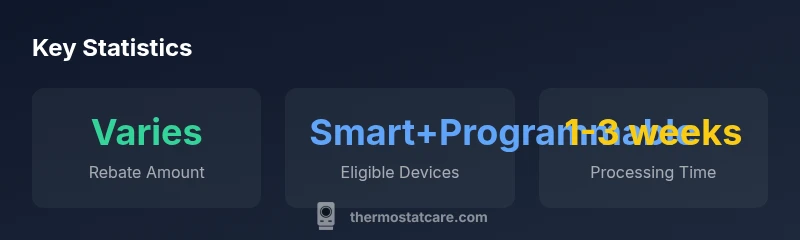
Not every thermostat qualifies for SCE rebates. In general, eligible devices include smart thermostats and certain programmable models with remote access, learning features, and energy-management capabilities. Devices must be installed in a manner that enables measurable energy savings, such as efficient heating/cooling scheduling and occupancy-based programming. Check the program’s device list for exact model eligibility and firmware requirements. If you recently purchased a thermostat that isn’t yet on the approved list, you may still qualify if the device meets the energy-savings criteria and the program year allows late submissions. Thermostat Care emphasizes verifying model numbers and firmware versions before installation to avoid post-purchase disqualification.
Step-by-Step Application Process
- Before you buy: review the current SCE rebate terms and confirm device eligibility. 2) Purchase an eligible thermostat and record model numbers, serials, and installation date. 3) Have the thermostat professionally installed if required by the program or ensure installation is documented with photos and receipts. 4) Gather supporting documents: proof of purchase, installation invoice, and any required energy-use data. 5) Submit the online rebate application through the official portal, attaching documentation. 6) Monitor the status and respond quickly to any requests for additional information. 7) Receive rebate credit or a separate payment and update your records for tax purposes. Thermostat Care notes that processing times can vary by program year and workload.
Tips to Maximize Your Rebate and Savings
- Confirm device eligibility before purchase and double-check firmware requirements.
- Bundle your thermostat upgrade with energy-saving settings (e.g., adaptive scheduling, humidity control) to maximize verified savings.
- Keep a clear installation record and documentation in a single folder for easy access during the review.
- If you’re eligible for multiple programs, inquire about stacking allowances and limits; some programs allow partial stacking while others do not.
- Reassess your heating and cooling setpoints to align with seasonal needs to achieve the best payback window. Thermostat Care recommends coordinating with a licensed professional when required by the program and verifying all steps against the official guidelines.
Case Study: A Typical Home Installing a Smart Thermostat
A mid-sized single-family home in Southern California decides to upgrade from a basic programmable thermostat to a Wi‑Fi-enabled smart model. They research the current SCE program, confirm model eligibility, and speak with a licensed technician to install and commission the device. After installation, they capture the installation date, thermostat model, serial number, and coverage area details. The homeowner submits the rebate request with receipts and a brief energy-use summary. Within a few weeks, the rebate is approved and applied as a credit on their bill. They notice improved comfort and lower cooling usage in the first cooling season, validating the energy savings assumption. This scenario is a typical example that Thermostat Care has observed in 2026 filings.
Documentation You'll Need
- Proof of purchase (receipt or invoice)
- Installation date and service provider details
- Thermostat model and serial number
- Any required energy-savings documentation or third-party verification
- Utility account information used for the rebate application
Keeping these documents organized before you start helps prevent delays and supports faster review by the program administrator.
How Rebates Interact with Other Energy Programs
Rebates for thermostats are one part of a broader energy-efficiency strategy. They can complement other incentives offered by the utility, state programs, or federal tax credits where eligible. Some utilities allow stacking, while others require choosing a single, highest-value incentive. If you’re upgrading multiple energy devices (e.g., insulation, windows, or efficient HVAC), coordinate the timing of applications so you can maximize overall savings without inadvertently disqualifying any offers. Thermostat Care recommends reviewing the latest program guidelines and consulting the official program portals to understand how rebates interact with other energy-efficiency offers in 2026.