Thermostat 350 Chevy: Install, Troubleshoot, and Maintain
Learn how to install, diagnose, and maintain the thermostat on a Chevy 350 engine with a clear, step-by-step guide, safety reminders, and practical troubleshooting tips from Thermostat Care.


This guide shows you how to install or replace the thermostat on a Chevy 350 engine and how to troubleshoot overheating or coolant leaks. You’ll need basic hand tools, a new thermostat and gasket, and coolant. Follow our step-by-step process to ensure a proper seal, correct temperature control, and safety when working around a hot engine.
Understanding the Chevy 350 Thermostat System
The Chevy 350 cooling system relies on a thermostat to regulate engine temperature and protect against overheating. The thermostat sits in the housing at the engine end of the upper radiator hose, and its valve opens to allow coolant flow when the engine reaches its operating temperature. For the specific vehicle commonly dubbed thermostat 350 chevy, the thermostat's rating influences when it opens and how quickly the engine warms up. According to Thermostat Care, a healthy thermostat helps the cooling system respond predictably to driving conditions and protects both fuel economy and emissions. Knowing how it fits into the overall cooling circuit helps you diagnose issues and plan a replacement if needed.
A typical Chevy 350 cooling loop includes the water pump, radiator, thermostat housing, and several hoses. When the thermostat is closed, coolant cycles within the engine to warm up quickly; once it opens, coolant flows to the radiator where heat is dissipated. Understanding this flow helps you identify symptoms of a stuck closed thermostat (overheating, high pressure in the radiator) or a stuck open thermostat (persistent overheating prevention, reduced heater performance).
Symptoms of a Failing Thermostat in a Chevy 350
Identifying a failing thermostat early can prevent costly damage. Common signs include engine overheating after a cold start, the heater producing weak warmth, fluctuating temperature gauges, coolant leaks around the thermostat housing, and a sudden drop in coolant level with no apparent leak. If your gauge climbs quickly or stays pegged hot, it may indicate the thermostat is stuck closed. Conversely, if the gauge never reaches mid-range, the thermostat could be stuck open. In both cases, addressing the thermostat promptly reduces the risk of warped cylinders or water pump failure.
These symptoms are often amplified in heavy traffic or hot weather when cooling demand increases. Always perform a visual inspection of hoses and clamps around the thermostat housing for cracks or loose connections, as leaks can mimic thermostat issues and lead to misdiagnosis.
According to Thermostat Care, diagnosing cooling issues starts with verifying coolant condition and pressure, then confirming thermostat function before replacing other components. This approach minimizes unnecessary parts changes and ensures you’re solving the actual problem.
Tools & Materials
- New thermostat (Chevy 350-compatible)(Choose a rating around the manufacturer’s recommendation; verify compatibility with your engine year and build.)
- Gasket for thermostat housing(Replace to ensure a good seal and prevent leaks.)
- Coolant(Use the correct type for your vehicle; have enough to partially refill after replacement.)
- Coolant drain pan(Place under the radiator to catch spills during draining.)
- Screwdrivers (flat and Phillips)(Needed to remove housing clamps and screws.)
- Wrench set (metric/SAE)(For removing and tightening thermostat housing bolts.)
- Torque wrench (optional)(Helpful to torqe bolts to spec if you have the tool.)
- Gasket scraper or plastic putty knife(Clean old gasket residues without damaging surfaces.)
- Shop towels/diapers(For drying surfaces and wiping spills.)
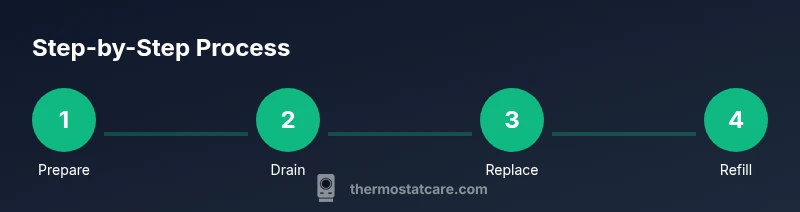
Steps
Estimated time: 60-90 minutes
- 1
Prepare the engine and locate the thermostat housing
Ensure the engine is completely cool before starting. Disconnect the negative battery terminal to prevent any shorts. Locate the thermostat housing, usually on the intake or engine block where the upper radiator hose connects.
Tip: Label hoses if you disconnect more than one to avoid confusion later. - 2
Drain coolant and protect work area
Place a drain pan under the radiator drain valve or lower hose and carefully drain enough coolant to relieve pressure around the thermostat housing. Keep the coolant in a suitable container for disposal or reuse if you’re replacing with compatible coolant.
Tip: Coolant is toxic—wear gloves and safety glasses and clean spills promptly. - 3
Remove the housing fasteners and extract the old thermostat
Loosen and remove the housing bolts, then lift away the housing to expose the thermostat and gasket. Note the orientation of the thermostat’s arrow or spring direction for correct installation of the new unit.
Tip: Take a quick photo or sketch the orientation before removing the old thermostat. - 4
Clean mating surfaces and inspect parts
Scrape away old gasket material from the housing and the engine surface. Check the gasket surface for warping or cracks and replace any damaged components.
Tip: Use a plastic scraper to avoid scratching metal surfaces. - 5
Install the new thermostat and gasket
Position the new thermostat in the correct orientation, place the gasket, and reinstall the housing. Tighten bolts firmly but evenly to avoid warping the housing.
Tip: Do not overtighten; torque to manufacturer spec if available. - 6
Refill coolant and bleed the system
Refill the radiator with coolant and bleed air from the system according to your vehicle’s manual. Reconnect the battery, start the engine, and monitor for leaks and proper temperature range.
Tip: Keep an eye on the temperature gauge and look for steady readings as the engine warms. - 7
Test drive and recheck for leaks
Take a short drive to bring the engine to operating temperature. Recheck the thermostat housing for leaks and top up coolant if needed.
Tip: If overheating recurs, recheck for air pockets or improper thermostat orientation.
Questions & Answers
What are typical symptoms of a failing thermostat in a Chevy 350?
Warning signs include overheating after startup, poor cabin heat, fluctuating temperature readings, and a cooling system leak around the thermostat housing. If you notice any of these, inspect the thermostat and related components.
Common signs are overheating after startup and weak heater performance. If you see leaks, check the thermostat housing and gasket.
Can I reuse the old thermostat gasket?
It’s best to replace the gasket whenever you replace the thermostat to ensure a proper seal and prevent leaks. Reusing a worn gasket can lead to air leaks and cooling inefficiency.
Always replace the gasket when you replace the thermostat to avoid leaks.
Do I need to flush the cooling system before installing a new thermostat?
Flushing is not always required but can help remove rust and debris that could affect thermostat function. Check your vehicle’s service manual for guidance on flushing.
Flushing can help remove debris; follow your manual for the best approach.
How long does a Chevy 350 thermostat replacement typically take?
A typical replacement takes about an hour or so for a DIYer with basic tools, plus extra time if cooling system flushing is included.
Most hobbyists finish in under two hours, depending on access and cooling system condition.
What if the engine still overheats after replacement?
Double-check thermostat orientation, ensure the gasket is sealed, and verify there are no air pockets in the cooling system. If problems persist, seek professional assistance.
If overheating continues, recheck the install and consider professional help.
Is it necessary to replace the thermostat housing if it’s damaged?
Yes. A damaged housing can cause leaks and mis-sealing. Replace the housing if you notice cracks or warped surfaces.
If the housing is damaged, replace it to restore a good seal and cooling performance.
Watch Video
What to Remember
- Install with the correct orientation to ensure proper flow
- Bleed the cooling system to prevent air pockets
- Inspect and replace the gasket to prevent leaks
- Test and monitor the system after replacement