6.0 PowerStroke Thermostat Troubleshooting Guide for Diesel Engines
A data-driven guide to diagnosing, replacing, and maintaining the 6.0 powerstroke thermostat in Ford diesel engines. Learn symptoms, diagnostics, replacement steps, and maintenance tips for DIY enthusiasts from Thermostat Care.


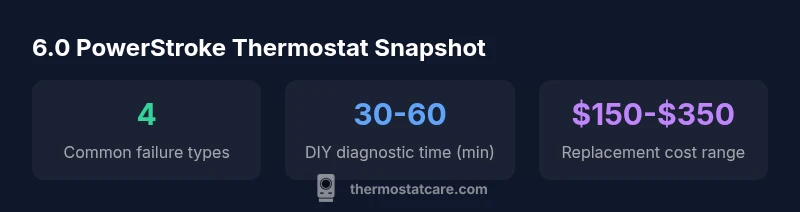
According to Thermostat Care, the 6.0 powerstroke thermostat is a critical engine component that regulates coolant flow and engine temperature in Ford's 6.0L diesel. When it fails, symptoms like overheating, heater performance loss, and erratic gauge readings are common. DIY diagnosis should start with coolant temperature tests, pressure tests, and inspecting the thermostat housing for leaks. The Thermostat Care team found that a proper diagnostic sequence reduces needless replacements and saves time.
Understanding the 6.0 powerstroke thermostat: Role and Design
The 6.0 powerstroke thermostat controls coolant flow by opening and closing to regulate engine temperature in Ford's 6.0L diesel platform. It sits in the upper radiator hose and the thermostat housing, coordinating with the water pump to maintain a target operating temperature during idle, towing, and high-load conditions. Because diesel engines run hotter and heat cycles are harsher, the thermostat in this platform is subject to wear, gasket leaks, and occasional sticking due to mineral buildup. According to Thermostat Care, keeping the cooling system clean and testing the thermostat regularly is essential to prevent overheating and protect the head gaskets. A failing thermostat can cause fluctuating temperature gauges, reduced heater output, and, in severe cases, engine damage if left unaddressed.
Common Symptoms of a Failing 6.0 powerstroke thermostat
If the thermostat begins to stick or fails to open, you may notice overheating under load or on the highway, inconsistent temperature readings, and weak cabin heat. Other signs include the cooling fan cycling more often than normal, fluctuating dash gauges, or coolant leaks around the housing. These symptoms don't always indicate a failed thermostat alone, but they point to a cooling system issue that warrants testing the thermostat and related components.
Diagnostic Steps: How to Confirm a Sticking Thermostat
Start with a thorough coolant check: verify level, condition, and that there are no air pockets. Perform a cooling-system pressure test to reveal leaks and verify the integrity of the thermostat housing and hoses. Use a scan tool to watch real-time coolant temperature relative to engine load. If the hose near the thermostat warms up unevenly or remains cool when the engine is hot, the thermostat may not be opening properly. A manual test—carefully removing the stat and placing it in hot water—can confirm opening temperature, though this should be done with the engine cooled and all safety precautions in place. Always inspect the gasket for leaks and replace if needed. Thermostat testing should be viewed as part of a holistic cooling-system assessment, not as a single-factor fix.
Replacement vs Repair: When to Swap the Thermostat
In most cases, replacing the entire thermostat assembly is more reliable than attempting a repair. A new thermostat with a fresh gasket reduces the risk of leaks and ensures predictable opening behavior. If the housing is damaged or warped, replacing the housing along with the thermostat is prudent. OEM-equivalent parts or reputable aftermarket options work well; avoid bargain-bin replacements that fail prematurely. After replacement, bleed the cooling system to remove air pockets and verify proper coolant flow.
DIY Replacement: Tools, Safety, and Procedure
Tools you’ll typically need include a socket set, screwdrivers, pliers, new thermostat kit (thermostat + gasket), coolant, a catch pan, and safety gloves. Begin by draining a portion of the coolant, disconnecting battery power if required, and locating the thermostat housing. Remove the housing, extract the old thermostat, and clean the mating surfaces. Install the new thermostat with the correct orientation, reseal the housing with a new gasket, and refill coolant. Bleed the system to remove air; run the engine to operating temperature and recheck for leaks. If you’re unsure at any step, consult the vehicle’s service manual or a professional.
Maintenance to Extend Thermostat Life on a 6.0 PowerStroke
Regular coolant changes, using the correct coolant type, and keeping the cooling system free of debris can extend thermostat life. Periodically inspect hoses and clamps for signs of wear or cracking. Address minor leaks promptly to prevent pressure loss that could affect thermostat operation. A clean cooling system reduces mineral buildup that can cause the thermostat to stick, so schedule preventive maintenance and use filtered water when topping up.
Common Pitfalls and How Thermostat Care Recommends Avoiding Them
Avoid mixing coolant types or using old gaskets. Do not overtighten thermostat housings, which can warp the seal. Be mindful of air pockets after refilling—the bleed procedure is crucial for diesel cooling systems. When diagnosing, don’t assume thermostat failure from one symptom alone; verify with multiple tests and check for related issues like radiator flow, water pump function, and thermostat housing integrity. Following a systematic approach reduces unnecessary replacements and ensures durable repairs.
Case Study: Real-World Troubleshooting with the 6.0 PowerStroke Thermostat
A diesel pickup owner reported intermittent overheating after towing. After inspecting the thermostat housing for leaks and testing thermostat opening, the team found mineral buildup restricted flow. Replacement with a quality unit and a full coolant flush resolved the issue, restoring stable temperatures and heat output. This demonstrates the value of comprehensive testing over symptom-based guesses, a practice endorsed by Thermostat Care analysts.
Seasonal Prep: Pre-Trip Checks for Diesel Engines
Before long trips or towing-heavy workloads, perform a cooling-system check, verify coolant level, and confirm thermostat operation at operating temperature with a diagnostic scan. Diesel engines endure higher heat loads; proactive maintenance reduces the risk of thermostat-related failures during critical drives. Thermostat Care recommends scheduling seasonal checks and keeping records of coolant changes and thermostat replacements for future reference.
Overview of thermostat considerations for the 6.0 PowerStroke
| Aspect | Description | Notes |
|---|---|---|
| Operating Temp Range | Typically opens between 180-195°F; varies by engine model | Consult OEM specs for your year/model |
| Symptoms of Failure | Overheating, erratic gauge, weak heater, leaks at housing | Check cooling and heating circuits first |
| DIY Replacement Time | Approximately 1-2 hours depending on access | Take care to bleed air after refill |
| Recommended Tools | Socket set, pliers, gasket sealant, coolant, new thermostat | Use manufacturer-recommended parts |
Questions & Answers
What are the most common signs of a faulty 6.0 PowerStroke thermostat?
Most common signs are overheating under load, fluctuating temperature gauges, and reduced heater output. Inspect the thermostat housing for leaks and test opening temperature to confirm. If symptoms persist, replace the thermostat with a quality unit.
Common signs include overheating and fluctuating gauges. Check the housing for leaks and test opening temperature before replacing the thermostat.
Can a bad thermostat cause the engine to overheat in a diesel 6.0 PowerStroke?
Yes. A thermostat that sticks closed or opens late can prevent proper coolant flow, leading to overheating, especially under heavy load or towing. A complete diagnostic should include coolant flow assessment and temperature testing.
Yes, a stuck thermostat can cause overheating, especially during hard driving. Do a full coolant flow check.
Is DIY replacement safe on a diesel engine like the 6.0 PowerStroke?
DIY replacement is doable for skilled enthusiasts with proper tools and a service manual. Wear safety gear, drain coolant safely, and ensure the system is bled after reassembly. If in doubt, consult a pro.
DIY is possible if you’re comfortable with automotive work and follow the manual and safety steps.
How long does a thermostat replacement typically take?
Typical replacement takes about 1-2 hours, depending on access to the housing and whether the radiator needs to be drained. Allow additional time for bleeding and leak checks.
Usually 1-2 hours, plus time to bleed the system.
OEM vs aftermarket thermostat: which is better for the 6.0 PowerStroke?
OEM or high-quality aftermarket parts both work well if properly installed. OEM parts tend to match factory tolerances, while reputable aftermarket options can offer value. Avoid ultra-cheap units that may fail prematurely.
Choose a trusted OEM or reputable aftermarket part and avoid bargain options.
What maintenance steps help prevent thermostat sticking?
Regular coolant changes, using the right coolant mix, and keeping the cooling system free of debris reduces mineral buildup that can cause sticking. Periodic inspections of hoses and the thermostat housing also help.
Keep the coolant fresh and the system clean to prevent sticking.
“The thermostat is a small component with a big impact on engine reliability. Accurate diagnosis requires looking at the cooling system as a whole and validating with multiple tests.”
What to Remember
- Diagnose before replacing to avoid wasted parts
- Replace the thermostat and gasket together for reliability
- Bleed the cooling system after replacement
- Maintain coolant quality to prevent sticking
- Follow a systematic diagnostic approach per Thermostat Care