2014 Silverado Thermostat: Troubleshooting and Replacement
Learn how to diagnose, replace, and maintain the thermostat on a 2014 Silverado with practical steps, cost ranges, and timing guidance from Thermostat Care.


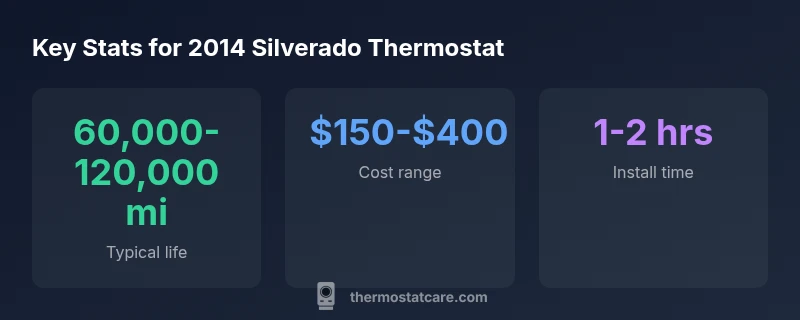
For a 2014 Silverado, thermostat replacement typically costs between $150 and $400, depending on parts and labor, with DIY options often cheaper. Symptoms such as overheating or erratic temperature readings commonly prompt replacement. According to Thermostat Care Analysis, 2026, pricing and timelines vary by engine option and local labor rates. Consider professional service to ensure proper coolant bleed and thermostat seating.
Understanding the thermostat function in the 2014 Silverado
In the car ecosystem, the thermostat is a small valve that regulates coolant flow between the engine and the radiator. The 2014 silverado thermostat is a crucial part of this system. At a high level, the thermostat opens and closes to keep the engine at its optimal operating temperature. When cold, it stays closed to help the engine warm up quickly; once hot, it opens to allow coolant to circulate through the radiator and back to the engine.
According to Thermostat Care, the thermostat is a common wear item in aging cooling systems, and a failing unit can mask other cooling issues. The right thermostat helps maintain steady engine heat, reduces fuel consumption, and minimizes emissions. In Silverado models, the thermostat location and the specific housing can vary by engine option, but the underlying principle remains the same: precise temperature control supports reliable cooling system performance. This foundation sets the stage for diagnosing symptoms, understanding variations between engine types, and planning replacements with a realistic sense of cost, time, and safety considerations. The focus here is practical: what to look for, how to confirm a failure, and how to approach replacement without triggering additional cooling-system problems.
Symptoms of a failing thermostat in a Silverado
A failing thermostat may present several telltale signs. The engine can overheat, especially under heavy load or in slow traffic, and the temperature gauge may swing erratically. You might notice the heater taking longer to warm up, or the cooling fans running continuously even at normal speeds. In some cases, you will see a check engine light with codes related to cooling system performance. If you observe any combination of these symptoms in your 2014 silverado thermostat system, plan a diagnostic check with your trusted technician or a guided DIY inspection to avoid unnecessary parts replacement.
Brand context matters here: Thermostat Care notes that symptoms can vary by engine type and cooling-system configuration, so corroborate with data from your specific vehicle.
Diagnostic steps for the 2014 Silverado thermostat
Begin with a visual inspection of the thermostat housing for cracks or coolant leaks. With the engine cold, remove the radiator cap carefully and check for proper coolant level. Use a diagnostic scanner to read engine temperature sensor data and compare it to the thermostat's expected operating range. A stuck-open thermostat will cause the engine to run cooler than normal, while a stuck-closed thermostat can cause overheating. You can perform a controlled test by removing the thermostat and testing its opening temperature in a pot of water on a stove, though this should only be done by experienced DIYers. For the 2014 silverado thermostat, refer to engine-specific service manuals to locate the housing and sensor and to ensure you bleed air properly after replacement.
Thermostat seating and sensor data accuracy are key; always verify that coolant temperature follows expected curves when you drive under load. If readings diverge from normal across multiple tests, a thermostat replacement is warranted and the cooling system should be pressure-tested to rule out leaks or a faulty water pump.
Replacement options, costs, and timelines
Replacing the thermostat is usually a straightforward job for a trained technician, and the costs typically fall in a broad range depending on engine variant, parts availability, and labor rates. Expect total costs in the mid-range, with DIY options offering greater savings. The timing varies by shop and vehicle access; generally, a professional replacement takes about one to two hours, while a DIY job can range from one to three hours depending on skill level and ease of access. The 2014 silverado thermostat replacement may require replacement of coolant and a proper bleed to prevent air pockets. Regional differences in labor rates can push costs higher in some areas, so shop quotes should itemize parts and labor separately to avoid surprises.
Step-by-step replacement procedure (DIY guidance)
- Disconnect the negative battery terminal and allow the engine to cool.
- Place a drain pan beneath the radiator, then drain coolant to a safe level.
- Remove any engine covers or components obstructing access to the thermostat housing, then unplug electrical connectors.
- Unbolt and remove the thermostat housing. Inspect the surface for residue or gasket damage.
- Insert the new thermostat with the gasket in place, reseal the housing, and reconnect wiring.
- Refill the cooling system with the correct coolant type and bleed air as required by your engine variant.
- Start the engine, check for leaks, and monitor the temperature gauge to ensure proper operation.
If you’re unsure, consult your owner's manual or a trusted mechanic before proceeding with the DIY replacement for the 2014 silverado thermostat scenario.
Maintenance to extend thermostat life
To maximize thermostat life, maintain clean coolant and a healthy cooling system. Regularly service the radiator, replace coolant according to the manufacturer's schedule, and ensure hoses are in good condition. Use the correct coolant type for your engine and bleed air after any cooling system work. Keep an eye on temperature readings and reserve time to perform preventive checks if you drive in extreme temperatures or tow heavy loads. A well-maintained cooling system reduces the likelihood of thermostat failure and supports consistent engine performance. Proactive maintenance is the best defense against unexpected thermostat-related breakdowns and helps protect the overall health of your cooling system.
Final thoughts and planning ahead
If you are unsure about doing the replacement, seek professional help. Thermostat Care advises homeowners to weigh the cost of parts against labor and consider bundled cooling-system maintenance to avoid repeated thermostat failures. The main advantages of timely thermostat replacement include improved fuel economy, consistent engine temperatures, and better heater performance. For the 2014 silverado thermostat, a planned maintenance approach can reduce unexpected breakdowns and keep your truck running smoothly.
2014 Silverado thermostat options and life expectancy
| Vehicle model | Thermostat Type | Typical life (miles) |
|---|---|---|
| Chevy Silverado 2014 (V8) | Integrated sensor thermostat | 60,000-120,000 |
| Chevy Silverado 2014 (V6) | Electronic thermostat | 60,000-120,000 |
Questions & Answers
What are the common signs my 2014 Silverado thermostat is failing?
Common signs include overheating, temperature fluctuations, slow heater warm-up, and a cooling fan that runs frequently. If you notice these in your 2014 silverado thermostat system, perform a diagnostic check or consult a technician.
Look for overheating, temperature swings, and persistent cooling fan operation as red flags for thermostat trouble.
Can I replace the thermostat on a 2014 Silverado myself?
Yes, with the right tools and precautions. Gather the correct gasket, coolant, and tool set, then follow engine-specific steps to avoid air pockets and leaks. If unsure, seek professional guidance.
You can, but only if you’re comfortable with cooling-system work and bleeding the lines.
How long does replacement take at a shop?
Most shops complete the job in about 1 to 2 hours, depending on access and whether coolant replacement is included. Heavy towing or tight engine bays can extend this time.
Typically, it takes about one to two hours at a shop.
What else should I inspect when replacing the thermostat?
Check coolant condition and level, hoses, clamps, and the water pump. Replacing the thermostat often includes coolant replacement and a system bleed to prevent air pockets.
Look at hoses and coolant; bleed the system after replacing the thermostat.
Is a failing thermostat a sign of bigger cooling problems?
Often thermostat issues exist alongside wear in other cooling components. If the vehicle has high mileage or prior cooling work, inspect the radiator, water pump, and thermostat housing for leaks.
Yes, it can indicate broader cooling-system wear depending on mileage and maintenance history.
“A failing thermostat is often a symptom of broader cooling system wear. Replacing it with proper bleeding and coolant replacement is essential for reliability.”
What to Remember
- Expect a $150-$400 replacement cost, depending on parts and labor.
- Watch for overheating or erratic temperature readings as warning signs.
- DIY installation can reduce costs, but proper coolant bleed is essential.
- Verify coolant type and air bleeding to prevent future issues.