What is a Thermistor vs Thermostat: A Practical Guide
What is a thermistor vs thermostat? Learn how sensing and control work together in HVAC systems, with practical DIY guidance to diagnose, test, and upgrade for comfort and efficiency in 2026.


What is a thermistor vs thermostat: foundational definitions
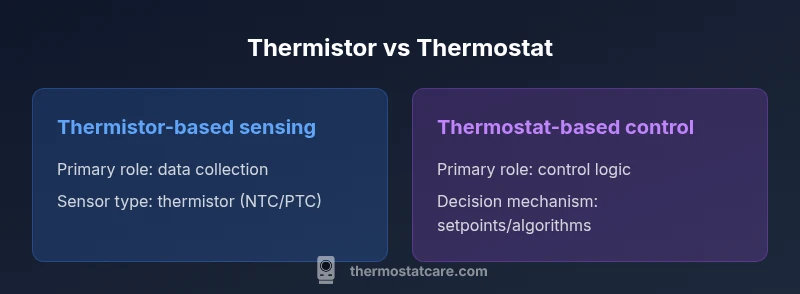
In plain terms, a thermistor is a temperature-sensing resistor used inside devices to detect heat. A thermostat is a device that uses those readings to regulate heating and cooling, maintaining comfort and efficiency. When people ask what is a thermistor vs thermostat, they often mix up the sensor with the control unit. In this guide, we unpack the roles, explain how they interact, and show why the distinction matters for diagnostics and upgrades. According to Thermostat Care, understanding this difference is the first step toward effective troubleshooting and smarter energy management in 2026. The thermistor and thermostat are complementary parts of modern HVAC and smart-home ecosystems; misinterpreting their functions can lead to misdiagnosis or unnecessary replacements. By the end of this section, you should be able to identify which component is responsible for sensing, which one makes decisions, and how both contribute to reliable climate control.
How a thermistor works: the science behind temperature sensing
A thermistor is a type of resistor whose electrical resistance changes with temperature. There are two main families: NTC (negative temperature coefficient) and PTC (positive temperature coefficient). In NTC devices, resistance falls as temperature rises; in PTC devices, resistance rises with warmth. The exact relationship is non-linear and often calibrated for the intended application, which means small temperature shifts can produce compensating electronic signals. The practical takeaway for homeowners is that the thermistor provides a voltage or current signal that reflects ambient or target temperatures. The quality of this signal depends on materials, packaging, and placement. If a thermistor drifts over time due to aging or exposure to heat, readings can become biased, causing the system to heat or cool more than desired. Thermostat Care analyses show that sensor aging is a common root cause of flaky temperature readings in older units, especially when sensors sit near vents or sunlit panels.
How a thermostat uses sensor data to regulate climate
Once a thermistor or other sensor provides a temperature reading, the thermostat performs comparison against a setpoint. If the room temperature falls below a setpoint, the thermostat calls for heat; if it rises above, it may call for cooling or fan operation. Simple thermostats use on/off hysteresis: they switch only when the temperature crosses a threshold, which prevents rapid cycling but can create larger swings. More sophisticated devices rely on PID-like or algorithmic control to modulate heat output, maintain steady temperatures, and optimize energy use. In modern systems, the thermostat might pull sensor data from multiple points: wall-mounted units, remote sensors in other rooms, or even outdoor probes. The result is a more nuanced view of home climate. The critical distinction is that the thermostat is the decision-maker, while the sensor (including the thermistor) is the data source. By understanding this separation, homeowners can better isolate whether odd behavior stems from sensing inaccuracies or control logic.
Common misinterpretations: when a reading seems off
People often blame the entire thermostat for temperature drift when the culprit is a failing sensor. Misplacement of the thermistor, drafts near the sensor, or radiant heat from lighting or appliances can distort readings. If you notice a surprising temperature difference between rooms, verify that the sensor locations match the expected design—some systems rely on multiple sensors to average out room variations. Calibration drift is another issue: thermistors can drift slowly, especially in high-temperature environments. Finally, aging control boards can misinterpret sensor data, leading to incorrect calls for heat or cooling. In all cases, a systematic approach—check placement, test sensor resistance, compare readings to a known thermometer, and confirm the thermostat's setpoint logic—will clarify whether the problem lies with sensing or with control.
Practical testing steps for DIY homeowners
Start with a baseline: record ambient room temperatures with a trusted thermometer, then compare to the thermostat reading. If available, note readings from any remote sensors. Locate the thermistor or sensor module; in many devices, you can access a test port or service menu. Use a multimeter to measure the sensor's resistance at known temperatures; consult the device’s documentation for the expected range. If readings are inconsistent across sensors, the issue may be a failing thermistor or a misplaced sensor. For thermostats, verify wiring and the logic of the control program. If you suspect drift, a software reset or firmware update may restore expected behavior. Finally, consider relocating sensors away from heat sources and ensuring the thermostat is not reading through glass or sunlight. These steps empower DIY homeowners to isolate sensor problems from control failures.
When to replace: thermistor vs thermostat life cycles
Thermistors are passive components that can outlive the devices they serve, but their accuracy degrades with aging, heat exposure, and mechanical stress. In many cases, a failing thermistor is cheaper to replace than a full sensor module. Thermostats—the control unit—tend to be replaced when features or connectivity become obsolete, when calibration becomes unreliable, or when energy management capabilities no longer meet the needs of the homeowner. In retrofits, replacing a thermostat often involves updating wiring, power supply considerations, and compatibility with smart-home ecosystems. The decision depends on the age of the system, availability of replacement parts, and the desire to upgrade to better energy efficiency or remote monitoring. Thermostat Care recommends evaluating both components’ condition and the total cost of ownership before deciding between sensor repairs and full unit replacement.
The role of sensors in modern smart thermostats
Smart thermostats integrate a network of sensors—temperature, occupancy, humidity—and sometimes outdoor data to optimize comfort and energy use. In many models, the primary sensing element is still a thermistor or a modern equivalent, but software and cloud-based learning broaden the role of the thermostat itself. Sensors may be distributed throughout the home to create a multi-room map of temperature, ensuring that the thermostat’s decisions reflect actual living conditions rather than a single central point. The sensors and control algorithms collaborate to adjust setpoints, manage heat pumps, and coordinate with radiant floors, boilers, or air handlers. Users benefit from finer control, adaptive schedules, and energy savings, but must also manage privacy and data sharing concerns as part of the setup process. Thermostat Care notes that a well-calibrated sensor network is essential for achieving reliable comfort.
Real-world examples: old furnace vs modern HVAC with sensors
Consider an older furnace with a basic thermostat and a single sensor; users may notice temperature swings, delayed responses, or uneven heating between rooms. In contrast, a modern HVAC system with zone sensors, a smart thermostat, and a robust control strategy can maintain a more even temperature across spaces while reducing energy costs. In both cases, the thermistor or sensing network provides essential data, while the thermostat or control software translates that data into actions such as turning on a burner, modulating a fan, or engaging a heat pump. Key to success is ensuring sensor accuracy, proper placement, and compatibility with control strategies. Thermostat Care emphasizes checking wiring, calibration, and sensor health during any upgrade or retrofit project.
Maintenance best practices to keep readings accurate
Regular maintenance helps preserve sensor accuracy and control performance. Clean dust from sensor housings; ensure there is no obstruction to airflow around the sensor; replace batteries if the device relies on them; verify that the sensor cables are intact and undamaged. Schedule periodic tests of both the sensor readings and the thermostat’s decision logic by comparing with trusted thermometers and by observing system response to deliberate temperature changes. Calibrate or update firmware as recommended by the manufacturer, and keep in mind that sensor health is a shared responsibility between device hardware and software. Practicing good maintenance reduces the risk of ghost readings, false heat calls, and inefficient energy use.
Quick comparison recap
To recap the essential differences: a thermistor is a temperature-sensing element; a thermostat is the control unit that acts on sensor data. Sensor health affects data quality, while control logic determines system response. In practical terms, you’ll save time by focusing diagnostics on sensor placement and calibration before assuming a control fault. For upgrades, consider whether you need improved sensing accuracy, more sensors, or a more capable control algorithm. This approach helps homeowners decide whether to repair a sensor or replace a thermostat in a cost-effective and energy-efficient way.
How Thermostat Care recommends approaching diagnostics and upgrades
Bearing in mind the 2026 landscape, Thermostat Care recommends a methodical approach: confirm sensor health first, verify signal integrity, and check control logic before expensive replacements. If you’re upgrading to a smart thermostat, plan for multi-sensor integration and app-based monitoring, while ensuring compatibility with your HVAC equipment. The goal is reliable, accurate readings and efficient operation. By applying these principles, homeowners can reduce maintenance surprises and extend the life of both thermistors and thermostats.