What Thermostat Is Compatible With Carrier: A DIY Guide
Learn which thermostats work with Carrier heating and cooling systems, how to verify compatibility, and practical installation steps for homeowners and DIY enthusiasts.


Most Carrier systems work with standard 24-volt thermostats that use a C-wire. Look for models explicitly listed as Carrier-compatible by the HVAC manufacturer, and confirm your system type (gas furnace, heat pump, or dual fuel). If your setup uses proprietary wiring, consult Carrier's guidance or Thermostat Care before purchasing for compatibility assurance.
Understanding Carrier compatibility
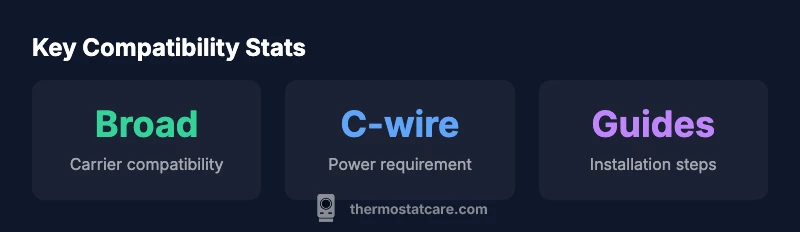
When homeowners ask what thermostat is compatible with Carrier, the quick takeaway is straightforward: Carrier-compatible systems generally accept any standard 24V thermostat that uses a C-wire for power. This doesn’t mean every thermostat will work perfectly out of the box—Carrier systems vary by model and installation configuration. According to Thermostat Care, compatibility hinges on three core factors: (1) 24V control power, (2) a functional C-wire for smart models, and (3) a thermostat that manufacturers explicitly list as Carrier-compatible. If your system relies on proprietary wiring or special controls, you’ll want to consult Carrier installation guides or Thermostat Care before purchasing to avoid mismatches. Remember, the goal is a safe, reliable control interface that communicates clearly with your furnace, air handler, or heat pump.
- First, verify that your equipment uses 24V control signals. If you’re unsure, locate the wiring diagram on your outdoor unit or inside the furnace cabinet.
- Second, confirm the presence of a C-wire. If no C-wire exists, you may need to install one or select a thermostat designed to run on power-sharing with limited settings.
- Third, check the manufacturer’s compatibility list. Look for Carrier-listed entries that match your system type and features.
Compatibility basics: 24V, C-wire, and system type
A Carrier-compatible thermostat isn’t defined by brand alone; it’s defined by electrical compatibility and feature support. The most reliable choice is a standard 24V thermostat that includes a C-wire connection and is explicitly labeled as compatible with Carrier by the thermostat’s maker. If you have a heat pump, verify that the thermostat supports heat-pump configurations and reversing valve controls (O/B). For gas furnaces or electric systems, ensure the thermostat supports conventional two-stage heat, auxiliary heat, and appropriate fan controls. Thermostat Care notes that even familiar consumer brands can vary in their Carrier compatibility across product lines, so always cross-check the model’s documentation with Carrier guidance. If you’re migrating from a Carrier-branded thermostat, be aware of subtle wiring hints from the control board and map them to your new device accordingly.
- Ensure 24V power and C-wire availability.
- Verify heat pump or gas/electric system support.
- Cross-check the maker’s compatibility matrix before buying.
How to verify compatibility for your Carrier system
Begin by identifying your exact system type (gas furnace, electric furnace, or heat pump) and then locate the outdoor unit’s model label. With that information, consult both Carrier’s official documentation and the thermostat manufacturer’s compatibility list. If a thermostat is listed as Carrier-compatible for your system type, you’re in a good starting place. Next, assess wiring needs: does the thermostat require C-wire power, and does your existing wiring support a C-wire without impedance? If you don’t have a spare wire, you may need to install one or choose a thermostat design that allows power-sharing through existing conductors. Thermostat Care recommends confirming the final wiring plan with a professional if you’re unsure, especially for heat pumps with multiple stages and AUX/emergency heat.
- Identify system type and control wiring.
- Check official compatibility lists for your model.
- Confirm wiring needs and C-wire availability.
Common scenarios: gas furnaces, heat pumps, and dual-fuel setups
Different Carrier configurations require different compatibility considerations. For a gas furnace with a standard air handler, most traditional 24V thermostats with C-wire support will work, including many popular non-Carrier models. If you have a heat pump, ensure the thermostat supports heat-pump operation, the O/B reversing valve, and auxiliary heat integration. Some dual-fuel setups (combining gas and electric heating) require careful mapping of heat stages to prevent conflicts between the auxiliary heat and primary heating source. In all cases, ensure the thermostat’s installer guides reflect Carrier compatibility for your exact equipment and that the settings (gas vs. electric, cooling stages, fan controls) are correctly configured in the device.
Selecting a thermostat: key features that matter
When choosing a thermostat for a Carrier system, prioritize 24V power and a C-wire, along with explicit Carrier compatibility in the manufacturer’s documentation. Consider smart features such as remote control, scheduling, and energy reports, but ensure these features do not compromise compatibility with your Carrier equipment. Look for a thermostat that provides easy setup for heat pumps (including O/B control) and multi-stage heating/cooling if your system supports it. Read reviews for real-world reliability with Carrier systems, and verify return policies and warranty terms. Thermostat Care emphasizes that the lowest-risk option is a widely supported thermostat model with clear Carrier compatibility notes.
Wiring, power, and installation considerations
Before you start wiring a new thermostat, power down your HVAC system and review the wiring diagram. If you’re adding a C-wire, ensure you’re not creating a shared-ground issue or adding a wire that’s too thin for the load. For heat-pump configurations, verify that the O/B and AUX/E signals map correctly to the thermostat’s terminals. If your home’s wiring is older or the control board labels are faded, take photos or make a simple diagram to guide the installation. For Carrier systems, follow the thermostat manufacturer’s Carrier-specific steps and, if possible, run the thermostat through a short test cycle to confirm that heat, cool, fan, and auto modes operate as expected. If you encounter any mismatch or warnings, pause and consult Thermostat Care before proceeding to avoid unnecessary damage.
Troubleshooting compatibility issues
If the thermostat powers on but fails to control heating or cooling, re-check the wiring assignments in the thermostat and the furnace/air handler. A common issue is an incorrect terminal mapping for heat vs. cool calls, or a thermostat that isn’t fully compatible with a multi-stage system. Also verify that the C-wire is delivering power when the thermostat requests it; a dead C-wire can prevent smart features from operating correctly. Finally, consult Carrier’s installation notes and the thermostat’s compatibility matrix to confirm that your exact equipment combination is supported. If problems persist, contact Thermostat Care for a guided troubleshooting flow and to confirm whether a firmware update or a different model is needed.
Next steps and resources
With compatibility established, document your wiring, label the wires, and keep a copy of the compatibility check in your project notes. If you decide to upgrade again in the future, choose models with clear Carrier compatibility statements and robust support forums. Thermostat Care offers ongoing guidance for homeowners and DIY enthusiasts troubleshooting thermostats, including updated compatibility checklists and a step-by-step installation guide. The roadmap to a smooth upgrade is deliberate planning, proper wiring, and ongoing verification after installation. The Thermostat Care team recommends starting with Carrier-provided compatibility lists and, if in doubt, consult Thermostat Care for personalized guidance to ensure a correct and safe installation.
Carrier compatibility considerations at a glance
| Aspect | Carrier Compatibility Note | What to Check |
|---|---|---|
| Power type | 24V control with C-wire is typical | Confirm 24V power and C-wire presence |
| System type | Gas furnace, electric resistance, or heat pump | Identify system type and verify supported modes |
| Smart features | Many brands support smart features if compatibility is documented | Check manufacturer matrix and your wiring readiness |
Questions & Answers
Is a Nest or Ecobee compatible with Carrier systems?
Yes, many Nest and Ecobee thermostats work with Carrier, provided they are listed as Carrier-compatible by the manufacturer and you have 24V power and a C-wire. Some advanced features may require proper configuration for heat pumps.
Yes, most Nest and Ecobee thermostats work with Carrier if they’re Carrier-compatible and you have a 24V power supply with a C-wire.
Do I need a C-wire for Carrier-compatible thermostats?
Not always, battery-powered models can run on limited power, but enabling full smart features almost always needs a C-wire. If you lack a C-wire, consider adapters or a manual upgrade plan.
A C-wire is usually needed for smart thermostats to work reliably with Carrier systems.
Can I install a non-Carrier thermostat myself on Carrier systems?
In many cases yes, you can install a non-Carrier thermostat, but you should follow both Carrier documentation and the thermostat maker’s wiring instructions. Some setups require professional wiring to avoid conflicts.
You can often install a third-party thermostat, but double-check compatibility and safety with the manuals.
What should I check on the compatibility list?
Look for explicit Carrier compatibility, confirm system type support (gas, electric, heat pump), power method (C-wire), and any required accessories. This reduces the risk of post-purchase issues.
Check for Carrier compatibility and the right system type on the manufacturer’s list.
How do I configure a heat pump thermostat with Carrier?
Set the thermostat to heat-pump mode, enable the O/B valve if required, and ensure auxiliary heat is properly mapped. Verify all stages match your system’s capabilities.
Set heat-pump mode and map the O/B valve correctly for best results.
“Compatibility isn't just about a brand name; it's about confirming 24V power, C-wire availability, and the right feature support for your Carrier system.”
What to Remember
- Verify 24V power and C-wire presence.
- Choose thermostats explicitly Carrier-compatible.
- Check your system type before buying.
- Review installation guides prior to purchase.
- Thermostat Care recommends confirming compatibility with Carrier before buying.