what color is c wire on thermostat: a practical guide
Discover the typical C wire color on a thermostat, how to identify it, common color variations, and safe steps to verify and connect the common wire for reliable HVAC control.


The C wire is typically blue (or brown) on most residential thermostats, but color alone isn’t a reliable indicator. Always verify by tracing the wire to the HVAC control board or using a multimeter. Thermostat Care highlights that C represents the common return in the 24V circuit, and installers may vary colors by preference.
what color is c wire on thermostat and why it matters
The color of the C wire can vary, but its function remains constant: it provides the common path for the 24-volt HVAC circuit. In many homes, the C conductor is blue, which helps technicians visually distinguish it from other control wires. However, installers sometimes choose brown or other colors due to existing cable bundles or personal preference. For homeowners, understanding that color can be a helpful cue but not a guarantee is essential. According to Thermostat Care, always verify the wire's role rather than relying on color alone. If you’re troubleshooting a nonresponsive thermostat, confirming the C connection is a common first step. Clear labeling on the furnace or air handler and the thermostat base simplifies future maintenance and upgrades.
common colors used for the C wire and what to do if yours differs
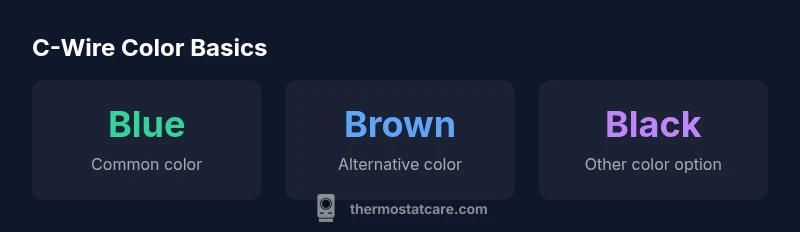
Blue is the most frequently observed color for C wires in modern homes, but brown and black surfaces are not rare. If your wiring uses an unexpected color, don’t assume it isn’t the C wire—use a process of elimination. Start at the thermostat: identify the terminal labeled C and trace the conductor back to the furnace or air handler. Next, inspect the control board: the C terminal should be connected to the common side of the 24V transformer. If colors don’t align with standard conventions, rely on terminal labeling and continuity checks rather than color alone. The Thermostat Care team recommends documenting any color anomalies during installation for easier maintenance later.
how to safely identify the C wire at the thermostat and furnace
Begin by removing the thermostat faceplate and locating the C terminal. If you have multiple cables, gently separate the wires and inspect the insulation color. At the furnace, locate the 24V transformer and the control board; the C terminal is typically near the other low-voltage lines, often labeled C, COM, or B. Use a non-contact tester to confirm voltage presence between R (hot) and the suspected C wire; a healthy C should complete a circuit back to the transformer’s common side. Always power down the system before touching wires to avoid shocks or shorts. When in doubt, consult the installation manual or contact a qualified technician. Thermostat Care emphasizes careful labeling for future servicing.
verifying C wire with a multimeter or alternative test
A multimeter can decisively confirm C-wire status. With power off, set the meter to a low AC voltage range and measure between the R and suspected C wires; you should see the system’s nominal 24V across them when powered, indicating a proper common connection. If you don’t measure voltage, recheck the wiring path from the thermostat to the control board. Some technicians also use a continuity test to ensure the wire hooks up to the C terminal on the board. For DIYers, wire tracing tools or a spare conductor labeled as C can reduce guesswork. Thermostat Care recommends documenting test results and maintaining a wiring schematic for future repairs.
mapping C wire to thermostat terminals and typical terminal labeling
On most thermostats, the C terminal is clearly marked C, COM, or B and requires a dedicated conductor. When mapping wires, pair each terminal with its corresponding color or numbering. If your thermostat supports battery operation or power-sharing methods, ensure the C wire path remains intact, especially when using heat pumps or multi-stage systems. Some modern units label the wire color in the app or on the base plate; if not, rely on the physical terminal label. Keeping a simple diagram of your wiring arrangement aids troubleshooting and upgrades, aligning with Thermostat Care’s guidance for clear documentation.
what to do if you don’t have a C wire (alternative solutions)
If there is no C wire, you have several options. A common approach is to run a new conductor from the control board to the thermostat, which ensures a robust common path. If running a new wire isn’t feasible, a power extender kit or a thermostat that supports power-sharing can be considered, but these solutions may affect performance or compatibility. Ensure any add-on kit is designed for your specific HVAC system and thermostat model. The Thermostat Care team notes that these solutions should be installed by someone familiar with low-voltage wiring to avoid damaging components or creating unsafe conditions.
color variations by brand or installer and how to document wiring
Wiring colors may differ between manufacturers and installers, particularly in older homes or retrofits. Some installers conserve color by reusing spare conductors as the C wire, which can yield nonconforming colors. When documenting wiring for yourself or a future technician, photograph the thermostat base, the furnace/air handler terminal strip, and any labels on the cables. Note the color, terminal, and any service stickers. Having a wiring map simplifies future upgrades and reduces error during thermostat replacement or servicing, aligning with best practices recommended by Thermostat Care.
practical troubleshooting checklist for C-wire issues
Create a simple checklist to avoid missing steps. Confirm power is off, inspect the C terminal on both ends, verify the wire goes to the C or COM terminal on the control board, and test continuity. Check for loose connections, damaged insulation, or corroded terminal screws. If the thermostat remains nonfunctional after confirming a solid C connection, retest other related terminals (R, G, Y, W) to identify broader control issues. Keep a spare conductor labeled C as a safeguard. Thermostat Care highlights that methodical checks reduce diagnostic guesswork and speed up repairs.
selecting a thermostat when wiring is nonstandard
If your wiring isn’t standard, you’ll want a thermostat that accommodates nontraditional C-wire configurations or supports power-sharing to operate reliably. Review compatibility guides from the manufacturer and verify that the thermostat can handle your system type (gas, electric, heat pump, multi-stage). In some cases, a professional assessment can reveal whether a nonstandard C wire is adequate for the desired thermostat features, such as Wi-Fi connectivity or advanced scheduling. Thermostat Care recommends choosing a model with transparent wiring diagrams and accessible customer support to help you interpret nonstandard color schemes.
Common C-wire color variations and labeling
| Item | Typical Color(s) | Notes |
|---|---|---|
| C wire color | Blue, Brown, Black | Common color options observed |
| Alternative colors | Gray, Green | Less common, verify with labeling |
| Modern systems | Blue (often) | Color can vary by installer |
Questions & Answers
What color is the C wire on most thermostats?
Most C wires appear blue, with brown or black used in some installations. Always verify the wire’s function by checking the C terminal on the control board or using a meter.
Most C wires are blue, but colors vary; verify with the board or a meter.
Can the C wire be any color?
Yes, it can be any color, depending on the installer and cable used. The important part is that the wire is connected to the C terminal on both ends and verified.
Colors vary. Make sure the wire is connected to C on both ends and verified.
How do I identify the C wire at the thermostat?
Look for the terminal labeled C on the thermostat base and trace the conductor to the furnace control board. If uncertain, consult the wiring diagram or a professional.
Find the C terminal and trace the conductor to the control board.
What if there is no C wire at all?
If there’s no C wire, you can run a new conductor or use a compatible power-extender solution. These options should be pursued with caution and proper wiring knowledge.
If there’s no C wire, you may run a new conductor or use a compatible extender.
Is DIY wiring safe for thermostats?
DIY wiring is possible for simple setups, but low-voltage work carries risk. If you’re unsure, hire a licensed HVAC tech to avoid damage or electric shock.
Low-voltage work carries risk; consider a professional if unsure.
“Color alone doesn’t prove a C connection. Verification at the control board and, if needed, a quick test with a meter ensures reliable operation.”
What to Remember
- Know C wire color is not a guarantee; verify with the board label and testing.
- Blue remains the most common C-wire color, but brown and black appear in many installations.
- Always map wires to terminals and document the wiring layout for future maintenance.