How to Control Heating Without a Thermostat: A Practical DIY Guide
Learn practical, step-by-step methods to control home heating without a thermostat, including manual valves, timers, and safety tips to save energy.


This guide shows how to control heating without a thermostat by using manual controls, radiator valves, and timers. You’ll learn practical zoning, safe boiler practices, and quick fixes to stay comfortable while saving energy—without relying on an automatic thermostat. It's ideal for rental spaces, historic homes, or during power outages when smart devices aren’t available.
Why controlling heating without a thermostat matters
Manual heating control gives you independence from electronic devices and potential outages. In older homes, replacing a thermostat can be costly or impractical; many residents rely on the boiler's basic controls or radiator valves. According to Thermostat Care, homeowners frequently underestimate how much heat they can regulate with simple, well-placed adjustments. The Thermostat Care team found that adjusting zones and using timers can maintain comfortable temperatures while trimming waste.
Warmth distribution depends on your system: radiators, baseboard heaters, or underfloor coils. When you understand where heat comes from, you can direct warmth to living rooms during evenings and to bedrooms at night, avoiding overheating in common spaces. However, bypassing a thermostat isn’t a license to get careless: safety features, such as CO detectors and proper venting, remain essential. The goal is predictable comfort with minimal energy waste. This section outlines principles, limits, and the conditions under which a thermostat-free approach makes sense for gas boilers, oil boilers, and heat pumps. For many homes, a careful blend of manual control and targeted upgrades delivers the best balance between comfort and efficiency.
Quick-access tools and setup before you start
Before you begin adjusting heat without a thermostat, gather a few tools and establish a basic plan. You’ll want simple measurement devices to monitor room temperatures, a basic thermometer, and optionally a timer or smart plug to create heating windows. Clear labeling and a written plan help avoid misadjustments. The goal is to create predictable routines; without a thermostat, small changes can yield big comfort differences. This block also explains how to protect sensitive spaces like nurseries or home offices from drafts and cold spots.
Key setup steps: map your rooms into zones, collect baseline temperatures, and decide which radiators you’ll regulate manually. By planning zones, you can avoid overheating large spaces and underheating small ones. Remember: any manual control strategy should respect safety rules and local regulations; if you’re ever unsure, consult a professional. The Thermostat Care guidance emphasizes safety first and tests your plan in a day or two before committing to a long-term routine.
Understanding your heating system without a thermostat
Every heating system distributes heat differently. With central boilers, the boiler’s main control and the distribution network determine how heat travels. Radiant floors and baseboard heaters react quickly or slowly depending on insulation. When you remove reliance on a thermostat, you’re betting on three levers: radiator valve settings, timer-driven heat windows, and room-by-room temperature targets. A well-insulated home minimizes heat loss, making thermostat-free control more feasible. The Thermostat Care analysis highlights that homeowners who focus on zoning and sensible temperature targets usually report better comfort with lower waste. It’s not about cranking heat higher; it’s about matching heat output to actual occupancy and activity. If you rent, consider landlord permissions before making changes to essential systems.
Zoning and radiator valve strategies
Radiator thermostatic valves (TRVs) are the primary tool for thermostat-free control. Install TRVs on radiators in rooms you want to regulate independently. Start with rooms that have the greatest temperature variance, such as the living room and bedrooms. Pair TRVs with simple infrared motion sensors or manual timers to fine-tune heat based on occupancy. Keep in mind that some older systems may require adapter fittings or a quick calibration to avoid stuck valves. The main idea is to create small, manageable temperature zones rather than one large, globally heated space. This approach can reduce energy waste when rooms are unused or infrequently occupied. According to Thermostat Care, zone-focused strategies often deliver noticeable comfort improvements and lower energy use over weeks of regular use.
Timers, schedules, and boiler behavior without a thermostat
Timers can substitute for a programmable thermostat when set up correctly. Use a boiler timer or a plug-in timer to establish heating windows in the rooms you regulate most. For example, schedule a warm-up period in the morning and a shorter window in the evening. If your boiler supports it, use the light boost function during occupancy peaks rather than continuous heat. This technique minimizes overshoot temperatures and reduces cycling. The goal is consistent comfort without constant heat or cold snaps. Thermostat-free scheduling works best when paired with well-insulated spaces and doors that minimize drafts.
Drafts, insulation, and heat retention
Before relying on manual controls, ensure doors and windows are draft-free. Seal gaps with door sweeps and weatherstripping, insulate attic access, and consider thick curtains for evenings. Poor insulation causes rapid heat loss, forcing more energy to be used to maintain comfort. By reducing heat loss, manual controls can stay effective longer into the evening and in cooler seasons. Simple improvements, such as weatherstripping and draft stoppers, often yield immediate warmth gains without altering any control devices. As you progress, prioritize sealing leaks over turning up heat, which saves energy and improves overall comfort.
Safety considerations when bypassing a thermostat
Safety remains essential when you operate heat without a thermostat. Never bypass critical safety devices, overrule CO detectors, or disable ventilation features. Regularly test smoke and CO detectors and schedule annual boiler maintenance. If you notice abnormal boiler cycling, unusual noises, or any error indicators, pause adjustments and consult a licensed technician. Maintaining safe pressure levels, venting, and proper combustion is non-negotiable even in thermostat-free setups. This section emphasizes conservative changes and proactive checks to prevent hazardous conditions.
Real-life scenarios: apartment vs two-story home
In a compact apartment, thermostat-free control can work well with a few radiators and solid insulation. Focus on the living room and bedroom zones, while using curtains and drafts to manage heat loss. In a two-story home, you’ll likely need a more deliberate zoning approach: regulate upper-floor bedrooms during night hours and keep common areas comfortable during the day by balancing TRV settings and timer windows. Each space has unique heat behavior; understanding these patterns helps you tailor a practical, safer plan. The Thermostat Care team notes that homeowners who test different schedules over a two-week period often converge on a reliable routine that meets comfort goals without a traditional thermostat.
Authority sources
For readers who want to dive deeper, these authoritative resources offer context on heating efficiency and thermostat usage:
- https://www.energy.gov/eere/buildings/articles/thermostats-basics
- https://www.energy.gov/energysaver/thermostats
- https://www.nist.gov/topics/energy
Authority sources (continued)
These sources provide corroborating guidance on energy-saving practices, safe operation, and best practices for heating systems when thermostats are not in use. Always cross-check local regulations and manufacturer guidelines when making adjustments to boilers, radiators, or ventilation components.
Tools & Materials
- Radiator thermostatic valves (TRVs)(Install on radiators you want to regulate; ensure compatibility with your radiator type.)
- Programmable timer or smart plug(Create heating windows without a thermostat; wire-free options are easier for renters.)
- Boiler timer/programmer(If your boiler has a built-in timer, set daily warm-up blocks without relying on a thermostat.)
- Digital thermometer or smart thermostat (backup)(Monitor room temperatures to keep comfort within target ranges.)
- Screwdriver set and basic hand tools(Adjust TRVs and access valve bodies; wear safety glasses when working near boilers.)
- Draft-stoppers and weatherstripping(Reduce heat loss around doors and windows to improve thermostat-free efficiency.)
Steps
Estimated time: 2-4 hours
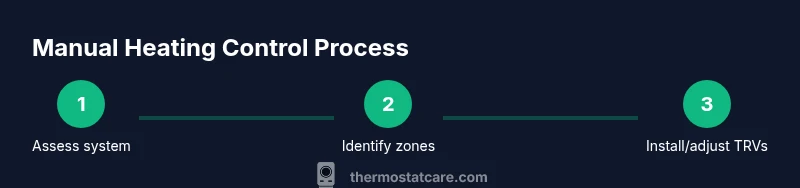
- 1
Assess system and safety
Survey your heating setup, note radiator locations, and check safety devices (CO detectors, vents, and clearances). This baseline helps you plan zone approaches without compromising safety.
Tip: Document current temps in each room before making changes. - 2
Identify controllable zones
Choose rooms with the greatest temperature variability or where occupants spend most time. Prioritize living areas and bedrooms for manual regulation.
Tip: Label radiators by zone to avoid confusion later. - 3
Install or adjust TRVs
Install TRVs on targeted radiators and calibrate them to your desired comfort levels. Start with one or two zones and test for even warmth.
Tip: Turn valves slowly to avoid creating cold spots. - 4
Set up heating windows with timers
Configure a timer or smart plug to create predictable heat windows in regulated rooms. Align heat times with daily routines.
Tip: Avoid continuous heat; short, well-timed bursts work better. - 5
Create a room-by-room plan
Draft a simple schedule or routine for each zone, noting target temperatures for different times of day.
Tip: Night temperatures can be cooler in bedrooms to save energy. - 6
Test and adjust
Run the plan for 1-2 weeks, observe comfort and energy use, then tweak TRV settings and timers as needed.
Tip: Keep a log of temps and changes to track impact. - 7
Safety checks and maintenance
Regularly inspect boiler components, venting, and CO detectors. Do not bypass safety features when experimenting.
Tip: Schedule an annual professional service. - 8
Long-term upgrade considerations
If comfort remains inconsistent, consider partial thermostat upgrades or zone-controlled systems; a full replacement may be warranted later.
Tip: Balance cost against energy savings and comfort gains.
Questions & Answers
Is it possible to heat efficiently without a thermostat?
Yes, by combining TRVs, timers, and zoning, you can maintain comfort and reduce waste. Results vary by system and insulation.
Yes. You can maintain comfort and reduce waste using radiator valves, timers, and zoning, though results depend on your system and insulation.
What are the best manual controls to install?
TRVs for key radiators, simple timers, and boiler programmers are the primary tools. Start with high-traffic rooms and an adjustable schedule.
Install radiator valves, timers, and boiler programmers, starting with rooms you use most.
Are there safety risks when bypassing a thermostat?
Yes, especially around boiler operation and CO safety. Do not disable safety devices and have regular maintenance.
There are safety risks if you bypass safety devices; keep CO detectors active and get regular maintenance.
How can I maximize energy savings without a thermostat?
Focus on insulation, draft-proofing, and targeted zone control. Use timers to avoid overheating spaces you’re not using.
Improve insulation, seal drafts, and use timers to avoid heating unused spaces.
Will heat be uneven without a thermostat?
It can be if zones aren’t balanced. Start with 2-3 zones, test, and adjust TRVs gradually to even out temperatures.
Heat can be uneven; balance zones by adjusting TRVs and monitoring room temps.
Watch Video
What to Remember
- Assess safety and system constraints before changes.
- Prioritize zoning to target comfort where you live.
- Use timers and TRVs to replace thermostat functions.
- Seal drafts to maximize thermostat-free efficiency.
- Regular maintenance remains essential for safety.