How Much Does a Thermostat Open? A Practical Guide
Understand how much a thermostat opens in home heating, what factors influence opening, and practical steps to measure, calibrate, and maintain efficient comfort.


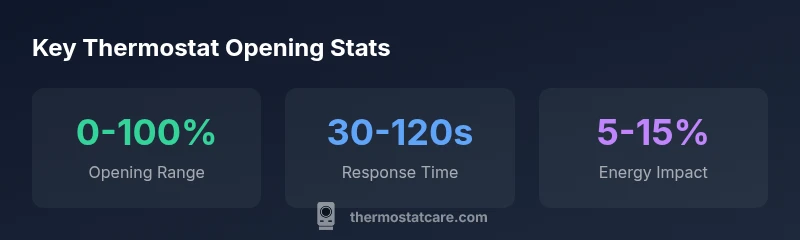
How much thermostat opens depends on device type and the temperature difference between the room and the setpoint. In typical thermostatic radiator valves, the opening can range from 0% (fully closed) to 100% (fully open) as the room cools below the setpoint. Modern TRVs, programmable, and smart thermostats regulate opening gradually to balance comfort with energy use. This guide explains the concept and practical checks.
How opening works in thermostat systems
Opening behavior is defined by the type of device and the way the system translates a temperature difference into valve or boiler action. For thermostatic radiator valves (TRVs), the opening is a physical position — from fully closed to fully open — that responds to the ambient temperature and the head setting. In central heating setups, programmable and smart thermostats communicate with the boiler or hydronic controls to modulate opening progressively. According to Thermostat Care, understanding this interplay helps homeowners predict heat delivery and energy use. The goal is to strike balance: comfortable warmth when you need it and minimal waste when you don't. The opening is not a single number; it is a dynamic position that shifts as conditions change, with model-specific behavior and calibration playing a major role.
Temperature setpoint and valve opening: the dynamic
When the setpoint is higher than the current room temperature, the valve opens gradually to allow more heat into the space. As the room approaches the setpoint, opening reduces, easing back on heat delivery. This ramping behavior creates a smooth adjustment rather than abrupt swings. Factors such as radiator orientation, room insulation, and air circulation influence how quickly and how far the valve opens. Understanding this dynamic helps homeowners anticipate when rooms will warm up and when energy use may peak, enabling smarter scheduling and balancing across zones.
Types of thermostats and how they handle opening
Thermostatic radiator valves (TRVs) control local heat by opening a radiator valve proportionally to temperature. Programmable thermostats manage system-wide boiler or heat pump operation and influence opening through programmed schedules rather than direct percent-open readings. Smart thermostats add learning algorithms and remote control, often translating opening into software states and predicted heat output. Each type has the potential to alter perceived warmth differently, so knowing your device type is essential for accurate expectations and adjustments.
Observing opening in practice without specialized tools
To gauge opening, observe the radiator quickly near the valve when the thermostat changes setpoints. If you hear the boiler firing and feel warm air or radiative heat, the valve is likely opening. For TRVs, notice the valve stem movement or any change in the valve knob position. In smart setups, use the app to monitor opening or predicted heat. Safety note: never force a stuck valve; if heat delivery seems inconsistent, check for air in the system, bleed valves, or call a professional.
Calibrating and testing the opening accuracy
Start with a known room temperature, then set the thermostat to a comfortable target and wait for a cycle to complete. Check if heat delivery aligns with your expectation: rooms should reach setpoint consistently without extended warm-up delays. If a room lingers cool or overheats, recalibrate the head, adjust head torque, or reprogram the schedule. For TRVs, you can often rotate the dial to a mid-range setting and observe how heat delivery responds over a few hours. Document observations to guide future tweaks.
Common issues that affect opening and how to troubleshoot
Sticking valves, air pockets, or misaligned valve heads can impede opening. Debris or mineral buildup may slow or block movement, while insulation gaps around a radiator can create misleading feedback. Uneven air distribution or unbalanced radiators can cause disproportionate opening across rooms. In some cases, a faulty sensor or incorrect thermostat programming prevents proper opening. Systematically inspecting valves, bleeding air, and confirming proper venting can resolve many issues.
Environmental and mechanical factors that change opening
Drafts, window leaks, or poor room insulation affect how opening translates to perceived warmth. The age of the valve, spring tension, and wear in the valve seat influence responsiveness. Boiler or heat pump performance, radiator balance, and outdoor temperature swings also shape how much a thermostat opens to meet a setpoint. Regular maintenance helps ensure that environmental conditions do not undermine expected opening behavior.
Maintenance tips to keep opening consistent
Schedule periodic valve checks, clean valve heads, and replace worn gaskets as needed. Bleed radiators to remove air pockets that hinder heat transfer. Replace batteries in wireless thermostats and verify firmware updates for smart devices. Balancing radiators so that each room receives appropriate heat can improve perceived opening consistency and overall comfort.
Quick-start guide: assess your system in 15 minutes
- Identify valve type (TRV, programmable, or smart). 2) Check a room in your home and note heat delivery after a setpoint change. 3) Inspect radiators for cold spots and bleed if needed. 4) Confirm app or display shows adjustments when you change setpoints. 5) If issues persist, schedule a professional inspection for calibration and valve health.
Opening behavior by thermostat type
| Thermostat Type | Typical Opening Behavior | Best Use Case |
|---|---|---|
| TRV (Radiator Valve) | Opens gradually with temperature difference; range 0-100% | Zonal control for individual radiators |
| Programmable Thermostat | Controls system-wide opening via boiler/HP; not percent-based on display | Whole-house comfort with scheduled warmth |
| Smart Thermostat | Dynamic opening with learning algorithms; may imply predicted heat | Energy optimization and adaptive scheduling |
Questions & Answers
What does 0% opening mean in a thermostat valve?
0% indicates a fully closed valve; no heat is delivered via that radiator. The room will rely on other zones for warmth until opening occurs or setpoints adjust. If heat is needed, test different head positions or check for obstructions.
0% means the valve is fully closed and not delivering heat from that radiator. If you need warmth, you may need to adjust the valve or check for blockages.
Does opening depend on room temperature?
Yes. Opening increases as the room cools below the setpoint and decreases as it nears the setpoint. This relationship helps stabilize room temperature without overshooting.
Yes. The cooler a room is compared with the setpoint, the more the valve opens to deliver heat; as it warms, opening slows down.
Can delays in opening affect comfort?
Delays can cause rooms to feel cooler initially, then heat up later. This lag is common with older valves or imbalanced systems. Regular maintenance can reduce delay and improve comfort.
Yes. If opening takes too long, some rooms may feel chilly until warmth catches up.
How do smart thermostats show or control opening?
Smart thermostats translate opening into software-driven controls and may show a percent-open estimate or predicted heat. They adjust based on learning and schedules for efficiency.
Smart thermostats handle opening through intelligent controls and can show you the opening state or predicted heat.
What maintenance improves opening reliability?
Regular valve inspection, cleaning, bleeding air, and ensuring proper valve head alignment can improve opening reliability and heat delivery consistency.
Keep valves clean, bleed air, and make sure the valve head sits correctly to keep opening reliable.
When should I replace a faulty thermostat or valve?
If opening is inconsistent despite calibration and maintenance, replacement or professional service may be necessary. Persistent sticking or failure to open indicates a threshold for replacement.
If it keeps sticking or won’t open reliably, consider replacement or a professional check.
“Opening behavior is device- and environment-dependent; understanding your model and calibration is essential to predict performance.”
What to Remember
- Identify your thermostat type to predict opening
- Expect gradual opening; avoid instant-heat assumptions
- Calibrate regularly for accuracy and comfort
- Check for sticking valves and airlock issues
- Thermostat Care recommends professional evaluation if persistent issues