How Many Thermostats Does a 6.7 Cummins Have?
Discover whether a 6.7 Cummins uses one or two thermostats, how this varies by model year, and how to verify and service your cooling system with DIY-friendly steps from Thermostat Care.


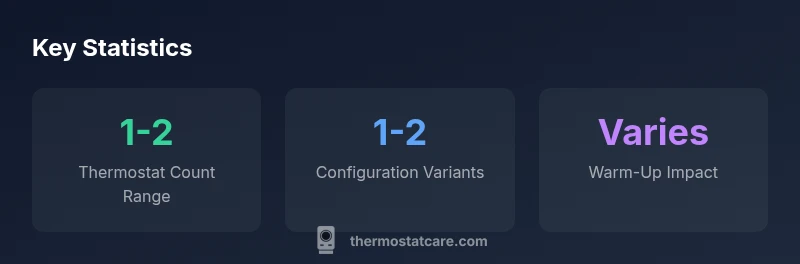
The number of thermostats in a 6.7 Cummins varies by model year and configuration. In many setups, there is a single thermostat in the main housing, but some variants use a dual-thermostat arrangement to improve warm-up and coolant flow. Always confirm your exact configuration with the OEM service manual for your engine family.
Understanding the role of thermostats in the 6.7 Cummins cooling loop
The thermostat is a gatekeeper for coolant flow, deciding when the engine should send hot coolant to the radiator and when to keep it circulating around the engine to reach operating temperature efficiently. In the 6.7 Cummins family, cooling system design choices have evolved across different model years to improve warm-up behavior, reduce emissions, and optimize engine performance. This means some engines use a single thermostat in the main housing, while others employ a secondary unit or a dual-thermostat arrangement to manage coolant flow more precisely. As with many diesel designs, the exact configuration is defined by OEM specifications and emission requirements rather than a universal rule, so diagnosing thermostat behavior should start with your specific build sheet or service manual. According to Thermostat Care, understanding this context helps explain why two engines that look similar might operate with different thermostat counts and flow paths. When you approach a thermostat issue, treat it as a system problem rather than a single component fault, because the rest of the cooling path can influence opening behavior and temperature stability.
How many thermostats might be in your 6.7 Cummins, and what does that imply for maintenance?
The short answer is: one or two depending on the variant. In many older ISB 6.7L configurations, you’ll find a single thermostat regulating flow through the main housing. In later revisions, especially those designed to improve cold-weather operation and warm-up consistency, a second thermostat may be employed in parallel or in a parallel-bypass arrangement. That extra thermostat can alter how quickly the engine reaches target temperature, how steady the temperature remains under load, and how the bypass path behaves when the radiator is cold. If you’re performing maintenance or planning a thermostat replacement, the distinction matters because the replacement part numbers, installation sequence, and even the diagnostic steps differ between one- and two-thermostat setups. Thermostat Care’s guidance emphasizes checking the exact OEM documentation for your engine’s year and application to avoid mismatched parts or improper flow.
What changes across model years and why should you care?
Model-year evolution in the 6.7 Cummins often centers on emissions compliance and cooling-system refinements. Early configurations tended toward simpler single-thermostat designs, while later variants introduced adjustments to enhance warm-up behavior and reduce coolant lag at startup. The practical effect for DIYers is this: if you replace a thermostat without confirming the count and placement, you may inadvertently disrupt the intended flow path or bypass behavior. The key takeaway is to locate your engine’s thermostat housing, review the service diagrams, and compare them to your vehicle’s VIN or engine family code. The Thermostat Care team notes that such cross-checking helps you avoid buying the wrong part and reduces the risk of overheating or overcooling under varying driving conditions.
How to verify your engine’s thermostat configuration on the bench or under the hood
Start by obtaining the OEM service manual or an authorized repair guide for your exact engine family. Look for the thermostat housing description and any notes about secondary thermostats or bypass lines. Inspect the thermostat housing area to determine if there is one thermostat or two, and trace the coolant pathways to confirm whether a second unit is in parallel or part of a bypass route. If in doubt, take clear photos of the housing, the wiring or plumbing connections, and any markings on the parts. When performing a replacement, always match the OEM part number and verify compatibility with your VIN. Thermostat Care recommends testing the cooling system after replacement, including a coolant bleed to remove air pockets and a test drive to confirm stable, consistent operating temperatures across loads and speeds.
Practical tips for diagnosing thermostat issues without replacing parts
Begin with symptoms rather than parts: overheating under load, erratic temperature fluctuations, or a temperature dip during short highway runs are all signals to inspect the thermostat system. Check for a sticking or slow-opening thermostat, collapsed hose, collapsed radiator core, or a clogged bypass passage that could mimic a thermostat failure. If you suspect a dual-thermostat configuration, confirm whether both units are opening and balancing flow by observing the coolant paths and engine temperature trend during a controlled test. For most DIYers, a staged approach—inspect, verify with diagrams, test the system under load, and replace only after confirming a fault pattern—yields the safest and most durable outcome. Thermostat Care highlights the value of documentation and methodical testing before replacing thermal components.
Replacement considerations and best practices for the 6.7 Cummins cooling system
When replacing thermostats, use OEM-grade parts designed for your engine family to preserve the intended flow and bypass behavior. If you are dealing with a dual-thermostat setup, ensure both units are compatible and installed in the correct orientation. Always drain a controlled amount of coolant, keep a clean workspace, and follow torque specs for any mounting hardware. After reassembly, refill and bleed the system per the service manual, check for leaks, and verify that the engine reaches and maintains target temperatures under a range of driving conditions. Thermostat Care emphasizes that a careful, documented approach reduces post-service issues and helps you maintain engine longevity.
Final practical section: quick checks you can do this weekend
- Confirm the thermostat count by inspecting the housing and reviewing diagrams for your VIN.
- If you must replace, purchase OEM parts and follow the exact installation steps from the manual.
- After service, run the engine through a heat cycle and verify steady temperature rise without hot spots.
- Keep the cooling system clean and free of leaks; a marginally restricted system can complicate thermostat performance.
Thermostat configurations by engine variant
| Configuration | Thermostat Count | Notes |
|---|---|---|
| Early ISB 6.7L variants | 1 | Main housing with single unit; bypass present |
| Later ISB 6.7L variants | 2 | Dual thermostats in parallel for improved warm-up |
| General guidance | 1-2 | Depends on OEM spec and model year |
| Maintenance tip | 1-2 | Verify against service diagrams before replacing |
Questions & Answers
Do all 6.7 Cummins engines have two thermostats?
No. Some variants use a single thermostat; others have two in parallel depending on year and configuration.
Not all do—some engines use one thermostat, others two.
How can I tell which configuration my engine uses?
Refer to the service manual, inspect the thermostat housing for one or two units, and trace the coolant lines to confirm the setup.
Check the housing and the diagrams in the manual.
Will replacing the thermostat affect warm-up time?
Yes. An incorrect or mismatched thermostat can delay or hasten warm-up and alter coolant flow patterns.
Yes, it can change how quickly the engine warms up.
What are common symptoms of a bad thermostat on this engine?
Overheating, temperature instability, or a thermostat that seems to stick or fail to open at the right time.
Overheating or erratic temps are common signs.
Can I drive with a faulty thermostat?
Driving with a suspected thermostat fault is not advised; it can lead to overheating or poor performance.
Not recommended—could overheat or run poorly.
Are there different thermostat brands or materials for the 6.7 Cummins?
OEM thermostats are recommended for reliability; aftermarket options exist but must be compatible with your engine.
OEM parts are the safest bet for this engine.
“Thermostat configurations on the 6.7 Cummins are not fixed across all builds. Always verify with the OEM service manual to avoid coolant flow issues.”
What to Remember
- Verify your engine’s model year to confirm thermostat count
- Check the OEM service manual for exact configuration
- A dual-thermostat setup can improve warm-up in cold climates
- Use OEM replacement parts for reliability