Is ecobee thermostat good? An In-Depth, Analytical Review
Is ecobee thermostat good? A detailed, evidence-based review covering setup, features, energy savings, privacy, and how it compares to Nest and Honeywell.


Compared with leading rivals, the Ecobee thermostat is a strong all-round smart thermostat. It shines with sensor-based energy optimization, broad HVAC compatibility, and reliable app control. Some shoppers may find the upfront price higher than alternatives, and the interface can feel less intuitive to first-time buyers. Overall, Ecobee is a solid choice for most homes, especially where multi-room sensing matters.
Is ecobee thermostat good? A practical, real-world assessment
For homeowners researching is ecobee thermostat good, the answer depends on what you value most: energy awareness, comfort consistency, or seamless ecosystem integration. The Thermostat Care Team focused this review on setup friction, long-term savings potential, and everyday usability to help DIYers and homeowners decide without guesswork. Ecobee stands out for its sensor-driven approach to comfort and its broad compatibility with many HVAC systems. It also plays well with popular voice assistants, is relatively straightforward to install for most 24V systems, and provides a comprehensive mobile app. If your home already uses HomeKit, or you want robust remote sensing across rooms, ecobee often comes out ahead. If you’re prioritizing a lower upfront price or a simpler user interface, you may want to compare alternatives more closely. In short, is ecobee thermostat good? It is, for the right home and the right expectations.
This section frames the core questions homeowners should answer: does your HVAC setup match Ecobee’s compatibility slate, do you benefit from room sensors, and is the cost justified by your anticipated energy savings and comfort gains? By keeping this lens in mind, you’ll know early whether ecobee is a good fit rather than chasing features you won’t use.
Installation reality: how easy is it to set up ecobee?
Setting up ecobee is typically a DIY-friendly process, especially for standard 24V systems with a C-wire. If your system lacks a C-wire, the Power Extender Kit is designed to help, though it adds a small layer of complexity. The quick-start guide is clear, and the touchscreen interface walks you through wiring choices, sensor placement, and Wi‑Fi setup. For renters or homeowners with complex systems (like multi-stage heat pumps or unusual layouts), expect a bit more time to map your zones and confirm compatibility. The Ecobee installation flow also emphasizes sensor placement for balanced temperature control, underscoring that the value of the product grows when sensor deployment mirrors lived-in spaces. If you’re wondering is ecobee thermostat good for DIY installations, the answer is generally yes for typical homes, with professional help recommended for nonstandard configurations.
Thermostat Care’s evaluation notes that planning a quick, room-by-room sensor map before you mount the main unit makes the setup smoother and reduces post-install tweaks. Additionally, ensure your Wi‑Fi signal is stable in key living areas to maximize remote control performance and data syncing.
Core features: sensors, ecosystem, and control
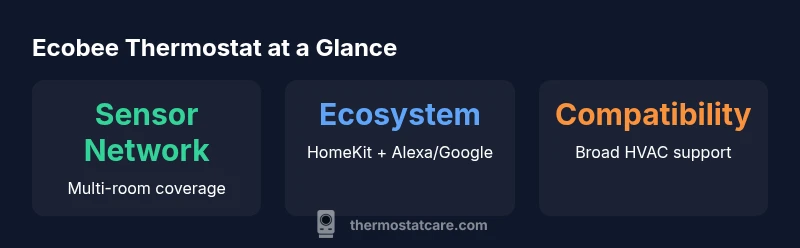
A central piece of evaluating is ecobee good is its sensor network. The included room sensors extend comfort by measuring temperature and occupancy, which helps the thermostat optimize heating and cooling more evenly across spaces. This sensor-driven approach contrasts with simpler thermostats that rely mostly on a single internal sensor. Ecobee also emphasizes compatibility with a wide range of HVAC systems, including many heat pumps, furnaces, and boilers. Native HomeKit support, along with Alexa, Google Assistant, and other services via the Ecobee app, makes integration into a smart home straightforward. For many users, this ecosystem flexibility is a decisive factor when considering is ecobee thermostat good. In practice, you’ll notice slower temperature swings and more consistent comfort in rooms with sensors, especially during shoulder seasons when sun exposure and occupancy can shift energy use dramatically. The company’s emphasis on energy management tools, routines, and remote access reinforces the value of upgrading to ecobee in a modern home.
Thermostat Care’s analysis highlights that if you already use HomeKit or a mixed ecosystem, ecobee tends to feel natural to adopt, with fewer friction points than some competitors.
Energy savings: what to expect in the real world
Energy savings are a key reason people ask is ecobee thermostat good. Real-world results depend on how you use the system and how well your home’s insulation, windows, and occupancy patterns align with predictive controls. Ecobee’s smart features—occupancy sensing, remote sensors, and adaptive scheduling—enable more precise control over when and how often heating or cooling runs. To maximize savings, pair Ecobee with regular routine tweaks rather than leaving the default schedules untouched. Avoid disabling the occupancy features in rooms that matter most. If your goal is to lower energy use, pairing the thermostat with a well-insulated envelope and mindful usage habits often yields the best outcomes. The shy of 2% to 5% range widely cited in popular press is not universal; the actual benefit varies by climate, home design, and personal behavior. In short, is ecobee good for energy savings? It often is, when used proactively and in the context of a well-insulated home.
Thermostat Care notes that savings are most pronounced in homes with multi-room occupancy and variable schedules, where sensors and smart recovery can adapt to real usage patterns.
How ecobee stacks up against Nest and Honeywell
When homeowners ask is ecobee thermostat good compared with major rivals, several practical differences emerge. Ecobee emphasizes room sensors and a broader HVAC compatibility slate, which can be a boon in larger homes or multi-zone configurations. Nest typically emphasizes simple setup, strong learning capabilities, and a tight Google ecosystem integration, which some users prefer for a streamlined experience. Honeywell’s lineup often targets reliability and straightforward performance with robust legacy support. Price points vary by model and included sensors, but ecobee’s value proposition is strongest for buyers who want multi-room sensing and HomeKit compatibility without sacrificing broad ecosystem support. The result is a balanced mid-to-premium option that appeals to homeowners who value precise comfort and flexible integration, rather than a bare-bones thermostat. If your home prioritizes sensor-driven comfort and home automation across platforms, is ecobee thermostat good? Yes, in many scenarios; if you want the most affordable, simplest solution, you may want to compare alternatives more closely.
Reliability, privacy, and ongoing support
Wi-Fi-dependent devices introduce considerations about reliability and privacy. Ecobee’s firmware updates tend to address feature enhancements and bug fixes, and the company provides app-based controls and remote diagnostics. In terms of privacy, standard protections accompany cloud-connected devices, including authentication and encryption practices typical of major smart home platforms. For households concerned about data sharing and third-party access, it’s worth reviewing Ecobee’s privacy settings and account permissions. A well-configured system with up-to-date software tends to offer a reliable experience for everyday use, but privacy-conscious users should routinely audit connected apps and devices. In this context, is ecobee thermostat good? It remains a solid choice for those who want dependable performance with robust control capabilities, provided steps are taken to maintain security settings.
Thermostat Care’s ongoing guidance emphasizes keeping firmware current and using secure networks to maintain the most reliable and private experience possible.
Common mistakes and how to avoid them
One frequent pitfall is underestimating the importance of sensor placement. Place sensors where they can accurately reflect typical occupant comfort, not just the room where the thermostat lives. Another mistake is leaving Eco+ or Smart Recovery settings at their default; customizing these helps ensure energy savings align with actual routines. Also confirm you have an adequate C-wire or use the Power Extender Kit only as advised by the installer guidance. Finally, don’t skip standard hygiene steps like checking for filter cleanliness and duct sealing; these steps influence heating and cooling efficiency just as much as the thermostat itself. By planning for sensor layout, wiring needs, and routine customization, you’ll avoid the most common missteps and unlock Ecobee’s true potential.
Who should consider ecobee: ideal use cases
Ecobee is especially compelling for homes that emphasize multi-room comfort, families with varied schedules, and households already using HomeKit or similar ecosystems. If your HVAC setup is diverse, you’re looking for strong sensor coverage, or you value a robust app experience, ecobee often proves a good match. For renters or buyers with tight budgets, explore whether cheaper options meet your needs or whether renting a better-insulation upgrade would amplify savings. In the end, is ecobee thermostat good? For many homes, especially those with multiple living spaces and a desire for strong ecosystem integration, the answer is yes, with caveats about initial cost and potential interface adjustments.
This section ties together the practical decision points and provides a framework for evaluating whether ecobee is the right fit for your home and budget.
Practical steps: how to decide next
- List your HVAC type and whether you have a C-wire; check compatibility with Ecobee’s supported configurations.
- Map room sensors to your living spaces to maximize comfort and energy savings.
- Compare your ecosystem preferences (HomeKit, Alexa, Google Assistant) and confirm native or supported integrations.
- Estimate total cost, including sensors and potential add-ons, and weigh it against expected energy savings.
- Plan a test period: run Ecobee with a structured schedule for 2–4 weeks and track comfort and utility bills.
- Review privacy and security settings and adjust permissions to suit your comfort level.
If you follow these steps, you’ll be well-positioned to decide whether is ecobee thermostat good for your home. The result should feel like a natural upgrade that aligns with your routines and technology preferences.
Upsides
- Strong sensor network for multi-room comfort
- Broad HVAC compatibility across many systems
- Native HomeKit support plus Alexa/Google Assistant integration
- Good mobile app and remote control features
- Energy-management tools that encourage smarter scheduling
The Bad
- Higher upfront price relative to some rivals
- Interface can feel less intuitive for first-time smart thermostat buyers
- Some advanced features require ongoing cloud connectivity
Best overall for multi-room sensing and ecosystem flexibility.
Ecobee delivers reliable comfort, strong sensor integration, and broad compatibility. It can be pricier than some rivals and may require more setup time for nonstandard systems, but its value shows up in real-world comfort and automation benefits.
Questions & Answers
Does ecobee support HomeKit and other ecosystems?
Yes. Ecobee offers native HomeKit support along with compatibility with Alexa and Google Assistant. The setup is straightforward within the Ecobee app, and you can control it through voice commands or automations across multiple ecosystems.
Ecobee works with HomeKit, Alexa, and Google Assistant, so you can control it with Siri or voice commands across devices.
Is installation feasible for beginners?
In most homes with a standard 24V HVAC system, the installation is DIY-friendly. A C-wire is often required, or you can use the Power Extender Kit if your system lacks it. Complex configurations may benefit from professional support.
For most homes, you can install it yourself if you have a C-wire. For unusual setups, consider a pro.
How well does ecobee handle multiple zones or rooms?
Ecobee’s room sensors help balance temperatures across spaces, making it well-suited for multi-zone homes. The sensors detect occupancy and temperature to optimize comfort in different rooms.
The room sensors are great for balancing temperatures between rooms.
Is ecobee good for renters or people on a budget?
For renters or tight budgets, consider upfront cost and potential installation limitations. Ecobee offers strong value, but there are cheaper options that cover basic needs. If you expect to stay long enough to recoup savings, ecobee remains a compelling choice.
If you’re renting or watching the budget, compare with cheaper options first.
What should I expect in terms of price and value?
Prices vary by model and sensors, but the payoff comes from energy savings and comfort gains over time. Consider your home’s insulation, climate, and daily patterns when estimating value.
Prices vary; focus on your home’s needs to gauge value.
What to Remember
- Evaluate sensor layout before installation to maximize benefits
- Choose Ecobee if multi-room sensing and HomeKit support matter
- Expect a mid-to-premium price with strong long-term value
- Plan for DIY setup or consider professional help for complex systems
- Review privacy settings and keep firmware up to date