Heat Pump Thermostat vs Regular Thermostat: A Practical Guide
Compare heat pump thermostats with regular thermostats to choose the best control for your home. Learn compatibility, features, energy savings, and installation tips.


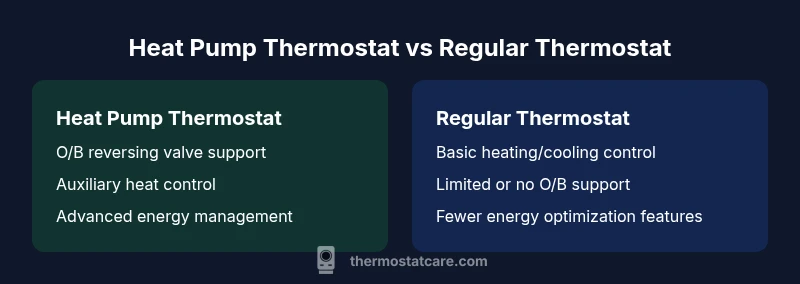
Heat pump thermostat vs regular thermostat comes down to system compatibility and control. A heat-pump-specific thermostat fully supports O/B reversing valve, auxiliary heat, and energy-saving modes, delivering better comfort and efficiency than a generic model. For homes with heat pumps, choosing a heat-pump-compatible thermostat is usually the best move; conventional thermostats can work but may limit performance and climate responsiveness.
Understanding the Core Difference: Heat Pump Thermostat vs Regular Thermostat
When you hear the term heat pump thermostat vs regular thermostat, the key distinction is not just branding but how the device talks to your heating and cooling system. A heat pump thermostat is engineered to manage a heat pump’s unique cycles, including reversing valve operation (often labeled O/B) and auxiliary or emergency heat. A regular thermostat, while perfectly adequate for traditional furnaces and central air, can fall short when asked to optimally coordinate a heat pump’s heating and cooling modes. Thermostat Care emphasizes that the right thermostat choice directly affects comfort, energy efficiency, and system longevity. The distinction becomes especially important in climates with variable heating and cooling needs, where a heat-pump-compatible thermostat can adjust defrost cycles, staging, and fan operation more intelligently than a standard model.
In short, heat pump thermostat vs regular thermostat is a question of compatibility, control sophistication, and long-term performance. If your home relies on a dedicated heat pump system, the Thermostat Care team recommends a thermostat designed for heat pumps to maximize efficiency and comfort. If you currently have a conventional HVAC setup without a heat pump, a regular thermostat may be sufficient, but you might miss out on optimization opportunities that a heat-pump-focused device provides.
System Architecture and Control Strategies
Heat pumps function differently from traditional HVAC setups. They extract heat from the outside air and move it indoors (and vice versa for cooling), using a reversing valve and sometimes auxiliary heat during cold snaps. This architecture requires a thermostat that can coordinate multiple elements—including the reversing valve position, compressor stages, and auxiliary heat—without creating conflicts. In the heat pump thermostat vs regular thermostat comparison, the controlling logic matters more than you might expect. A heat pump thermostat uses specific control algorithms to decide when to activate auxiliary heat, switch to emergency heat, or adjust fan speeds to balance comfort and energy use. Regular thermostats may default to simpler, single-stage logic that can cause longer defrost cycles, inefficient warm-up, or uncomfortable swings in indoor temperatures.
From Thermostat Care’s perspective, the best outcomes come from devices that communicate with the heat pump’s outdoor unit and internal sensors, providing accurate information for each stage of operation. Look for features like adaptive recovery, weather compensation, and precise O/B valve control. These capabilities help prevent short cycling and ensure smoother transitions between heating and cooling, which is especially important in variable climates where the heat pump’s performance can dip without proper control.:
In this context, heat pump thermostat vs regular thermostat becomes a choice about whether your thermostat can fully support heat-pump optimization or simply provide basic on/off control. A well-chosen thermostat should minimize energy waste while maintaining consistent comfort across seasons.
Compatibility, Wiring, and Installation Considerations
Compatibility is the first big hurdle in the heat pump thermostat vs regular thermostat debate. Not all thermostats are created equal when it comes to heat pump systems. A thermostat designed for heat pumps will typically support an O/B reversing valve configuration, aux heat, and defrost logic, while a regular thermostat may only offer standard heating and cooling setpoints without nuanced control of the heat pump cycle. Wiring is another critical factor. Heat-pump-ready thermostats often require a C-wire (common) for continuous power in smart models, and some older homes may lack a dedicated C-wire run or present compatibility challenges with newer smart features. If you’re replacing an old thermostat, you may need to add or repurpose conductors, reconfigure the wiring terminal block, or adjust the HVAC control board to ensure reliable operation. Thermostat Care recommends verifying that your existing wiring can support the thermostat’s power needs before purchase. If you’re unsure, consult a qualified technician to avoid miswiring that could affect heat pump performance.
In practice, the decision to upgrade should consider both wiring readiness and the heat pump’s electrical load. A properly wired heat pump thermostat ensures constant power, stable Wi‑Fi connectivity for smart models, and reliable communication with the outdoor unit. Remember that improper wiring can lead to control faults, imbalance in heating vs. cooling, and even damage to the reversing valve over time.
For homeowners tackling the heat pump thermostat vs regular thermostat choice, identifying the exact model’s wiring diagram and confirming compatibility with your heat pump brand are essential steps before purchase. The Thermostat Care team stresses personal readiness helps avoid costly mistakes and minimizes installation stress.
Features that Matter for Heat Pumps
When evaluating a thermostat for a heat pump, the feature set matters more than flashy marketing titles. The heat pump thermostat vs regular thermostat comparison highlights several features that can dramatically influence comfort and energy savings. Look for O/B reversing valve control, precise staging for heating and cooling, and automatic conversion between heat pump and auxiliary heat modes as outdoor temperatures shift. A strong model will offer the ability to customize fan control for each mode, energy-saving scheduling, and adaptive recovery to bring rooms to target temperatures more quickly after a setback.
Smart features also matter. Wi‑Fi connectivity, mobile app control, and voice assistants are beneficial, but only if the thermostat can operate reliably with your heat pump’s controls. Inconsistent software updates or overly aggressive fan settings can degrade comfort and energy performance. Additionally, sensor placement within the home influences perceived temperature. A good heat pump thermostat should allow multiple sensors or at least respond to indoor temperature variations without forcing the whole house to chase a single reading.
In the broader heat pump thermostat vs regular thermostat decision, prioritize devices with proven interoperability with common heat pump configurations and clear diagnostic feedback. Thermostat Care’s guidance is to select a model that provides actionable diagnostics (e.g., poor outdoor unit communication, compressor lockout, or defrost status) to preempt performance issues before they become noticeable on the thermostat screen.
Compatibility, Wiring, and Installation Considerations (Continued)
A frequent pitfall in the heat pump thermostat vs regular thermostat debate is choosing a device that lacks cross-compatibility with your outdoor unit’s control signals. Some heat pumps require specific terminal mappings for O/B, AUX heat, and compressor stages. Before purchasing, map out which terminals your existing equipment uses and compare them to the thermostat’s terminal block. If you’re unsure, there’s no shame in calling a pro; a small upfront investment in installation can yield significant gains in reliability and energy savings over time. If you decide to DIY, make sure you disconnect power at the breaker panel, verify that multi-stage heating and cooling are supported, and test each mode after installation. In light of this, the heat pump thermostat vs regular thermostat decision hinges on ensuring the thermostat can command all heat-pump-specific functions without conflict or delay.
Energy Efficiency and Cost Implications
One of the main drivers in the heat pump thermostat vs regular thermostat decision is energy efficiency. Heat pumps are inherently efficient, and the right thermostat helps them operate closer to the system’s ideal performance envelope. With a heat-pump-compatible thermostat, you typically gain access to advanced scheduling, optimized defrost cycles, and load-shifting capabilities that can reduce energy use, particularly in shoulder seasons when heating and cooling demands fluctuate. Even with high-quality insulation, the thermostat’s role in coordinating stages and maintaining comfort in cold or hot snaps matters. Consumers should consider not just the upfront cost of a heat-pump thermostat but also the potential long-term savings from improved efficiency and reduced wear on the heat pump. Thermostat Care notes that while some models carry a higher price tag, their energy-management features can provide a favorable payback over time, especially in climates with variable temperatures and frequent defrost cycles.
Real-World Scenarios: When to Upgrade or Stay with Regular Thermostat
Every home is different, and a few practical scenarios can illustrate when the heat pump thermostat vs regular thermostat choice matters most. If your home relies on a heat pump as the primary heating source and experiences cold snaps where auxiliary heat is activated frequently, upgrading to a heat-pump-compatible thermostat is typically warranted to ensure efficient operation and comfort consistency. In milder climates or homes with a traditional furnace/AC combination, a modern regular thermostat might suffice, provided it can still support scheduling and basic remote control. However, even in these cases, a heat-pump-ready device can offer smoother transitions between modes and greater long-term visibility into system health. Thermostat Care emphasizes validating compatibility with your specific heat pump brand and confirming that the outdoor unit’s sensors and valve configurations will respond correctly to the thermostat’s commands. Real-world users often report noticeably more stable temperatures and fewer short cycles after upgrading to a heat-pump-capable thermostat.
Seasonal Comfort and Performance Across the Year
Seasonal performance is one of the most tangible differences in the heat pump thermostat vs regular thermostat comparison. A heat-pump-compatible thermostat can intelligently modulate heating and cooling based on outside temperatures, humidity, and defrost cycles, improving comfort during shoulder seasons when temps swing widely. In winter, the thermostat can optimize auxiliary heat operation to minimize energy use while maintaining warmth, and in summer, it can coordinate compressor cycling and fan speed to sustain comfort without excessive energy draw. The Thermostat Care team notes that many failures stem from mis-timed defrost periods or poor coordination between outdoor and indoor units. A properly configured heat-pump thermostat helps avoid these issues by maintaining alignment between the heat pump and its control logic. Conversely, a regular thermostat may not adjust as efficiently to seasonal shifts, leading to minor temperature swings and unnecessary energy use.
Installation Best Practices and Maintenance
Maintenance is often overlooked in the heat pump thermostat vs regular thermostat discussion, but it matters. Regular battery checks (for non‑wired sensors) and ensuring connected devices stay updated are essential. For hardwired units, periodic inspection of the wiring harness, terminal connections, and the C-wire continuity can prevent power-related issues. If your thermostat supports adaptive learning or geofencing, ensure the associated app and firmware are kept current to maintain security and performance. Thermostat Care recommends scheduling a quick annual check with a professional to confirm that the reversing valve control and auxiliary heat are functioning correctly. Proper maintenance helps sustain energy savings, extends equipment life, and maintains comfort throughout the year.
Buying Guide: How to Choose Between Heat Pump Thermostat and Regular Thermostat
Comparison
| Feature | Heat pump thermostat | Regular thermostat |
|---|---|---|
| System compatibility | Specifically designed for heat pumps with O/B and AUX heat support | Best for conventional furnaces/AC; limited heat-pump features |
| O/B reversing valve support | Yes (full control for heat pump mode) | Typically not supported or limited |
| Auxiliary heat control | Yes (integrated defrost and backup heat management) | Limited or no dedicated AUX heat management |
| Wiring requirements (C-wire) | Often requires a C-wire for power, especially smart models | May work with basic wiring; C-wire not always required |
| Smart features compatibility | Full smart features and remote control | Smart features may be limited or basic |
| Diagnostics and maintenance | Advanced diagnostics for heat-pump operation | Standard diagnostics for conventional systems |
| Price range | Higher upfront cost due to heat-pump features | Lower upfront cost, but fewer optimization options |
| Best for | Homes with heat pumps seeking optimized performance | Traditional HVAC systems or simple setups |
Upsides
- Improved climate control for heat pumps
- Access to energy-saving modes and smart scheduling
- Better compatibility with O/B valve and auxiliary heat
- Long-term energy savings with compatible systems
- Greater diagnostic information for heat-pump setups
The Bad
- Higher upfront cost for heat-pump-specific thermostats
- Potential compatibility issues with older wiring
- Some models may require professional installation
- Software updates can occasionally cause bugs
Heat pump thermostat is the recommended choice for homes with heat pumps.
A heat-pump-compatible thermostat provides proper control of the reversing valve, auxiliary heat, and energy-saving features, delivering better comfort and efficiency. If your system uses a conventional furnace/AC without a heat pump, a regular thermostat may suffice, but you’ll miss optimized performance.
Questions & Answers
What is a heat pump thermostat?
A heat pump thermostat is designed to control heat pumps, including reversing valve (O/B) and auxiliary heat; it optimizes heating and cooling by using heat-pump-specific logic. This ensures efficient operation and consistent comfort.
A heat pump thermostat is built to manage heat pumps, including the reversing valve and auxiliary heat, for efficient comfort.
Can I use a regular thermostat with a heat pump?
In some cases you can, but it’s not ideal. A regular thermostat may lack O/B control and auxiliary heat coordination, which can reduce efficiency and comfort.
You can run a heat pump with a regular thermostat, but you’ll miss key features that optimize efficiency and comfort.
Are heat pump thermostats compatible with all heat pump brands?
Most heat pump thermostats are compatible with common brands, but check that it supports your O/B and AUX configurations. Some brands require specific wiring or features.
Most models work with many brands, but verify O/B and AUX support for your system.
What should I look for when wiring a heat pump thermostat?
Look for C-wire support, proper O/B terminal, and compatibility with auxiliary heat and defrost controls. Verify the thermostat’s wiring diagram matches your HVAC control board.
Ensure your thermostat has a C-wire, correct O/B wiring, and supports Aux heat and defrost logic.
Is installation DIY-friendly?
Many models are DIY-friendly if you’re comfortable with basic wiring, but some installations benefit from a professional touch to ensure correct heat-pump operation.
It can be DIY, but consider professional help for complex setups.
Do heat pump thermostats save energy?
Yes, they can improve efficiency by optimizing heat pump cycles and defrost schedules, but savings depend on climate, insulation, and usage.
They can save energy when set up correctly, especially in variable climates.
What to Remember
- Choose a heat-pump-compatible thermostat for heat pump performance
- Verify wiring and C-wire availability during installation
- Leverage energy-saving features and smart schedules
- Consider installation costs and potential professional wiring needs
- Check compatibility with O/B valve and auxiliary heat