Open vs Closed Thermostats: A Practical Comparison
This analytical guide compares open and closed thermostat ecosystems, highlighting interoperability, security, setup, and cost to help homeowners decide which approach best fits their automation goals and budget.


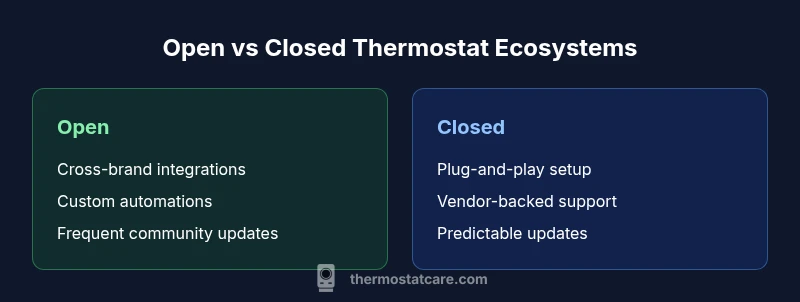
Open thermostat vs closed refers to two ecosystem approaches: open ecosystems use cross-brand integrations and open APIs, offering customization and flexibility, while closed systems favor simplicity and vendor-led support with tighter control over features. For homeowners, the best choice balances interoperability, security, and ease of use based on tech comfort and budget.
What open thermostat vs closed means in practical terms
When people ask about open thermostat vs closed, they are typically comparing two kinds of ecosystem approaches. An open thermostat ecosystem emphasizes interoperability, open standards, and the ability to mix devices from different brands. A closed ecosystem, by contrast, is built around a single vendor or tightly controlled partners, prioritizing a streamlined setup and cohesive support. This distinction matters because it shapes the speed of installation, the level of customization available, and how future-proof your home automation feels. According to Thermostat Care, the choice often comes down to how much you value flexibility and cross-brand compatibility versus simplicity and guaranteed vendor support. This framing helps homeowners map their priorities to features like integrations, security updates, and price, rather than chasing every new gadget on the market.
Why the distinction matters for homeowners
The open vs closed decision influences daily life. Open ecosystems can adapt to new smart home devices as they emerge, reducing the risk of being locked into a single brand’s roadmap. This flexibility is attractive to DIY enthusiasts who like tinkering with automations and custom routines. However, the downside can be a steeper learning curve, more complex setup, and potentially uneven support if some devices don’t play nicely together. Closed systems offer a tidy, plug-and-play experience with strong, centralized updates and predictable compatibility within the vendor’s lineup. This can translate to faster installation, fewer compatibility headaches, and more straightforward warranty coverage. For families prioritizing reliability and minimal maintenance, a closed system can feel like a safer bet. Thermostat Care analysis shows that homeowners often report higher initial satisfaction with closed systems, especially when non-technical users are involved.
Interoperability and ecosystem considerations
Interoperability is the defining issue in the open vs closed debate. Open ecosystems typically support a broad range of devices, voice assistants, and automation platforms, which can enable powerful routines like weather-based cooling or occupancy-triggered heating. In practice, you’ll want to verify that your preferred hubs or assistants—whether it’s a major voice assistant, a home automation platform, or a partner sensors line—are officially supported. Closed ecosystems shine when users want a seamless, end-to-end experience with minimal setup, integrated energy reports, and predictable firmware updates. The trade-off is reduced flexibility; upgrades or new accessories may require sticking with the original vendor. For a home that already uses a single-brand smart home setup, a closed system often delivers the least friction.
Security, privacy, and updates
Security is a critical dimension in this choice. Open ecosystems can offer rapid security patches because multiple vendors and communities contribute to the ecosystem, but they also demand diligent user practices—strong passwords, regular updates, and careful permission settings. Closed systems tend to provide a more controlled security posture, with vendor-managed updates and defined privacy policies. The risk here is that if the vendor ceases support, you may be left with slower updates or a need to migrate to a newer system. Thermostat Care emphasizes evaluating update cadence, privacy controls, and auditability when choosing between open and closed options. Regular firmware updates and transparent data practices should be non-negotiable in either path.
Cost and value: upfront vs long-term
Open ecosystems may carry a broader range of pricing, where you pay for individual components, sensors, and hubs. Over time, this can offer more customization but may also introduce higher total ownership costs if you purchase many compatible parts. Closed systems typically present bundled pricing, predictable monthly or annual costs, and unified warranty coverage. While the upfront cost can be higher for single-brand bundles, the long-term value often includes easier maintenance and fewer surprises. When budgeting, consider not only the sticker price but also the cost of future upgrades, compatibility guarantees, and the potential need for adapters or replacement devices.
Performance and control quality
The perceived performance of an open vs closed thermostat set can vary based on the quality of devices and the robustness of automations. Open ecosystems enable advanced geofencing, multi-vendor routines, and customizable triggers, which can improve comfort and efficiency for tech-savvy homeowners. However, the learning curve may lead to inconsistent results if some components don’t align perfectly. Closed systems tend to deliver reliable, uniform performance across the entire stack, with consistent response times and energy reporting. In practice, most households notice fewer “weird” behaviors with a closed system, while tech-forward users may get a richer experience from open configurations through deeper customization and cross-device automations.
Energy savings implications
Energy-saving potential is not solely determined by whether a thermostat is open or closed. It depends on how you configure schedules, use geofencing, and integrate with smart devices such as window shades or weather services. Open ecosystems can enable more sophisticated energy-management strategies by incorporating devices from multiple vendors, which can yield incremental savings if set up thoughtfully. Closed systems can still be highly efficient if they include well-designed energy analytics, good scheduling, and a strong emphasis on airtight routines within the vendor’s ecosystem. Thermostat Care recommends focusing on real-world usage patterns, occupancy behavior, and consistent routine testing to achieve meaningful energy savings, regardless of ecosystem type.
Setup, maintenance, and troubleshooting
Setup complexity often follows the ecosystem choice. Open systems may require more time to configure multiple devices and confirm compatibility, but they offer flexibility to tailor automations precisely. Ongoing maintenance can involve monitoring security settings and firmware updates across several brands. Closed systems typically provide guided setup, fewer devices to manage, and centralized support channels, making it easier to troubleshoot. Regular maintenance—checking firmware, validating schedule logic, and updating your network security—applies to both approaches. Thermostat Care suggests creating a simple maintenance calendar, especially if you operate a mixed environment or rely on remote access features.
Use-case scenarios: when open wins vs when closed wins
Open ecosystems excel in homes that embrace experimentation, multi-brand devices, or custom automations that push the boundaries of comfort and efficiency. If you value best-in-class sensing, motion or occupancy detectors from different vendors, open systems may maximize performance. Closed systems shine in households prioritizing simplicity, reliable updates, and predictable support where there is a preferred single vendor, and limited need for third-party integrations. In practice, your decision should hinge on how much you value flexibility over convenience and whether your automation goals require cross-brand compatibility or a streamlined, vendor-owned experience.
How to evaluate options: a practical checklist
- Identify must-have integrations (voice assistants, smart sensors, energy services).
- Assess security and privacy settings, including how data is stored and who can access it.
- Compare total cost of ownership (upfront vs ongoing) and warranty terms.
- Check compatibility with your existing devices and future plans for upgrades.
- Review update cadence and long-term vendor support expectations.
- Consider the ease of setup and the level of ongoing maintenance you’re prepared to perform.
- Look for independent reviews or field tests that evaluate real-world performance across multiple devices.
- Decide if you prefer a single-brand experience or the ability to customize across brands.
Thermostat Care’s recommended approach for typical homes
For most homeowners who want a reliable, low-maintenance system, a thoughtfully chosen closed ecosystem offers predictability and strong vendor support, especially when there is limited time to devote to setup and maintenance. If you are a tech enthusiast, or you already rely on multiple smart devices from different brands, an open ecosystem can unlock powerful automations and future-proofing benefits. Thermostat Care advises starting with a needs assessment: list your must-have integrations, comfort goals, and security expectations. Then compare two or three concrete options that map to those priorities. In all cases, prioritize solid update policies, clear data practices, and robust user controls to protect your home network and personal information. The Thermostat Care team recommends testing a few representative routines and simulating scenarios to ensure your chosen approach consistently meets your daily needs.
Comparison
| Feature | open ecosystem | closed ecosystem |
|---|---|---|
| Interoperability and integrations | High cross-brand compatibility and open APIs | Vendor-controlled integrations within the ecosystem |
| Security updates and patch cadence | Frequent, community or vendor-supported updates (varies) | Vendor-led updates with formal cadence and controls |
| Ease of setup and ongoing maintenance | May require more initial setup; more complex to customize | Typically simpler setup; cohesive maintenance |
| Cost flexibility and total ownership | Modular pricing; potential higher total ownership | Bundled pricing; predictable, single-vendor costs |
| Future-proofing and upgrades | Easier to adopt new devices from multiple brands | Limited to the vendor’s roadmap and compatible devices |
| Best for | Tinkerers, multi-brand homes, and advanced automations | Families and users seeking reliability with minimal friction |
Upsides
- Better interoperability across brands and platforms
- More customization options for automations
- Greater potential for future-proofing with open standards
- Less vendor lock-in over the long term
- Broader compatibility with third-party smart home devices
The Bad
- May require more initial setup and ongoing configuration
- Potential security and privacy management complexity
- Inconsistent support across devices in a mixed ecosystem
- Higher risk of headaches if devices don’t play nicely together
Open ecosystems offer greater long-term flexibility; closed systems win on simplicity and guaranteed vendor support
Open thermostats are best for tech-forward homes that want cross-brand interoperability and deep customization. Closed thermostats appeal to homeowners who prioritize quick setup, predictable updates, and strong single-brand support. Your choice should reflect how much you value flexibility versus ease of use.
Questions & Answers
What is the core difference between open and closed thermostat ecosystems?
Open ecosystems emphasize interoperability and open standards, allowing devices from multiple brands to work together. Closed systems are vendor-controlled and prioritize a seamless, single-brand experience with integrated support.
Open systems let different brands talk to each other, while closed systems stay within one vendor's world for simplicity.
Do open thermostats expose homeowners to more security risks?
Open ecosystems can have more potential entry points if not managed carefully, but strong security practices mitigate these risks. Regular updates and careful permissions are key.
Yes, they can be more exposed, but good security practices make them safer.
Can I mix open and closed devices in one home?
Mixing is possible in some setups, but it can complicate automations and reduce reliability. A clear integration strategy helps manage compatibility.
You can mix them, but it takes planning to keep things running smoothly.
Which option tends to be cheaper in the long run?
Long-term costs depend on device counts, support needs, and upgrade cycles. Open systems can be cheaper if you reuse components, while closed systems offer predictable pricing.
Cost depends on how you plan to expand and maintain your system.
Are there reputable brands that offer open ecosystems?
There are brands known for open compatibility and strong community support; evaluating official compatibility lists helps identify reliable options.
Yes, there are solid options if you want openness, just check compatibility.
Is performance the same for open vs closed?
Performance varies by device quality and setup. Open systems can offer richer automations, while closed systems tend to deliver consistent, dependable results.
Performance depends on the device quality and your configuration.
What to Remember
- Evaluate your need for cross-brand integrations vs. plug-and-play simplicity
- Prioritize strong security settings and regular firmware updates
- Choose open if you value customization; choose closed if you want minimal maintenance
- Consider long-term costs, not just upfront price
- Test automations with a small pilot before full rollout